

Roasted Bone Marrow
Dairy free, Egg free, Gluten Free, Nut free, Soy free
About the recipe
Bone marrow might not be the first food that comes to mind when thinking about feeding babies, but it has actually been valued in traditional diets for generations. Many cultures prized marrow as one of the most nutrient-dense parts of the animal, and it remains a beautiful whole food to include when babies begin their solids journey.
From around six months of age, babies have very high nutritional needs but relatively small stomachs. This is why including nourishing fats alongside iron-rich foods can be so helpful. Fats help increase the energy density of meals so babies can get more nutrition from the foods they eat.
Fats also play an important role in brain development, hormone production and overall growth during infancy. Another benefit is that fats help the body absorb certain nutrients from foods, particularly fat-soluble vitamins such as vitamins A, D, E and K.
Bone marrow is particularly rich in nourishing fats. While it does contain small amounts of iron, it isn’t considered a primary iron source. Instead, we like to use it alongside iron-rich foods such as meat, eggs or legumes to help create balanced meals for babies.
At Boob to Food we love highlighting traditional foods like bone marrow. In fact, it’s something we have recommended for years and included in our starting solids book Milk to Meals, which draws inspiration from ancestral foods that nourished generations before us.
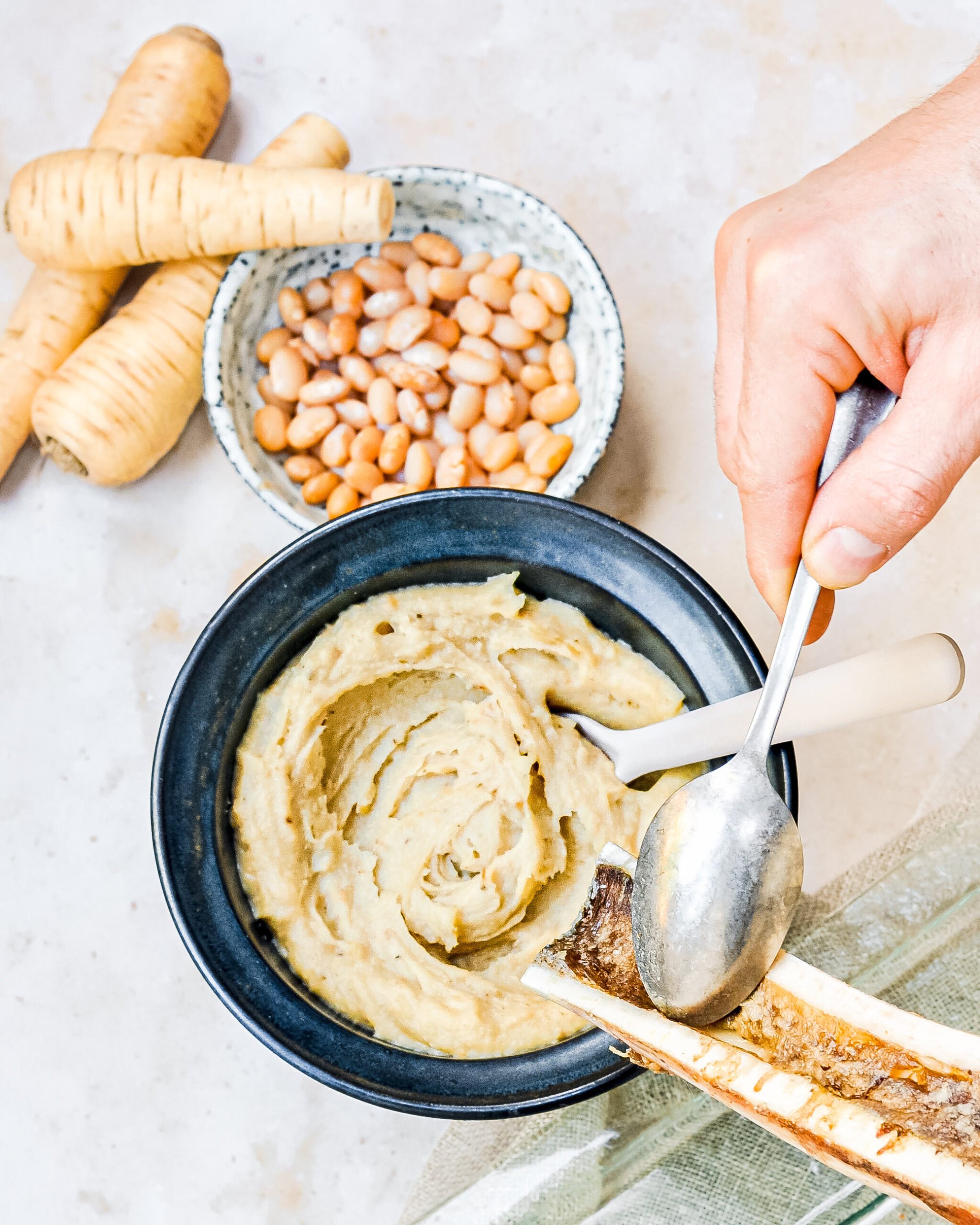
Another wonderful thing about marrow is its texture. Once roasted it becomes soft, buttery and spreadable, making it easy to mix through purees, mash into vegetables or use as a spread or dip for finger foods.
Is Bone Marrow Good for Babies?
Yes, bone marrow can be a nourishing addition to a baby’s diet once they are ready to start solids, usually around six months of age.
Bone marrow is rich in fats that support growth and development, and these fats help increase the energy density of meals. This can be particularly helpful for babies who have high nutritional needs but small stomachs.
While marrow does contain small amounts of iron, it is best served alongside iron-rich foods such as meat, eggs or legumes to help meet babies’ increased iron requirements during the second half of infancy.
Age Appropriate:
From 6 months, once baby is showing all signs of readiness for starting solids.
Any notes for serving BLW or puree:
For puree-fed/spoon-fed babies, roasted bone marrow can be blended or stirred through other foods such as sweet potato, pumpkin or carrot. The marrow increases the nourishing fat content of the meal while keeping the texture smooth and easy to eat.
For baby-led weaning, marrow works well as a spread or dip. It can be spread onto roasted vegetables.
Once chilled, marrow firms up and can be blended into a smooth, creamy texture. This whipped marrow can be served on a preloaded spoon, spread onto vegetables or toast, or served in a silicone feeder.
How to Serve Bone Marrow to Babies:
Bone marrow is very versatile and can easily be incorporated into many baby-friendly meals.
You can stir a spoonful through mashed vegetables such as sweet potato or pumpkin, mix it into brothy rice, or spread whipped marrow onto soft toast fingers for baby-led weaning.
It also works well as a dip for roasted vegetables or soft strips of meat.
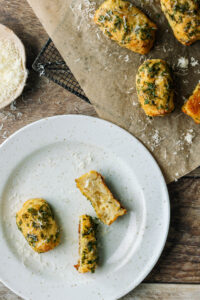
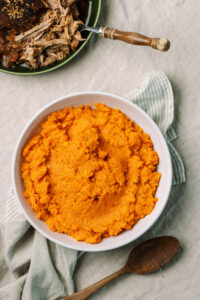
If you’re looking for recipe ideas, we use marrow in several baby-friendly meals including our bone marrow bites for babies, mushroom and marrow puree, and sweet potato mash with bone marrow. These are simple ways to incorporate this nourishing traditional food into baby and toddler meals.
Storage for freezer and fridge:
Roasted bone marrow can be stored in an airtight container in the fridge for up to 3 days. Make sure to include all of the rendered fat from the tray when storing, as this contains much of the nourishment and helps the marrow whip well once chilled.
You can also freeze small portions in silicone trays for up to 3 months. Defrost in the fridge overnight before serving.
What to Ask Your Butcher For
When buying bones for marrow, ask your butcher for beef marrow bones. These are typically cut either lengthways (often called canoe cut) or crossways (round cut).
Canoe-cut bones are often the easiest to use because the marrow is exposed and easy to scoop out once roasted. Cross-cut bones also work well, but you may need a small spoon to scoop the marrow from the centre.
Most butchers are very familiar with marrow bones, so you can simply ask for:
“Beef marrow bones for roasting.”
You can also ask the butcher to cut them into shorter pieces (around 8–10 cm) if they are very long, which helps them fit neatly onto a baking tray.
If beef bones aren’t available, lamb marrow bones can also work well.
Ingredients
- Beef marrow bones (canoe cut or cross cut)
Method
How to Prepare Bone Marrow for Babies
Preheat the oven to 200°C.
Place the marrow bones cut-side up on a baking tray lined with baking paper.
Roast for around 10–20 minutes until the marrow is soft, glossy and slightly bubbling but not completely melted away.
Allow the bones to cool slightly. Use a small spoon to scoop the marrow out of the bones.
Serve immediately mixed through puree, spread onto soft finger foods, or mashed into vegetables.
If storing or whipping, place the marrow in a container along with all of the rendered fat from the tray.
Whipped Bone Marrow
Roast as per instructions above and refrigerate including the fat.
Once the roasted marrow has been refrigerated and fully chilled, it will firm up.
Add the chilled marrow and all of the fat to a blender or small food processor.
Blend for around 10–20 seconds until smooth, light and creamy.
Serve the whipped marrow as a spread on toast fingers, a dip for finger foods, mixed through purees, or placed in a silicone feeder or on a preloaded spoon for babies to explore.
Let’s Search
What’s on your mind?

Slow-Cooker Roast Chicken
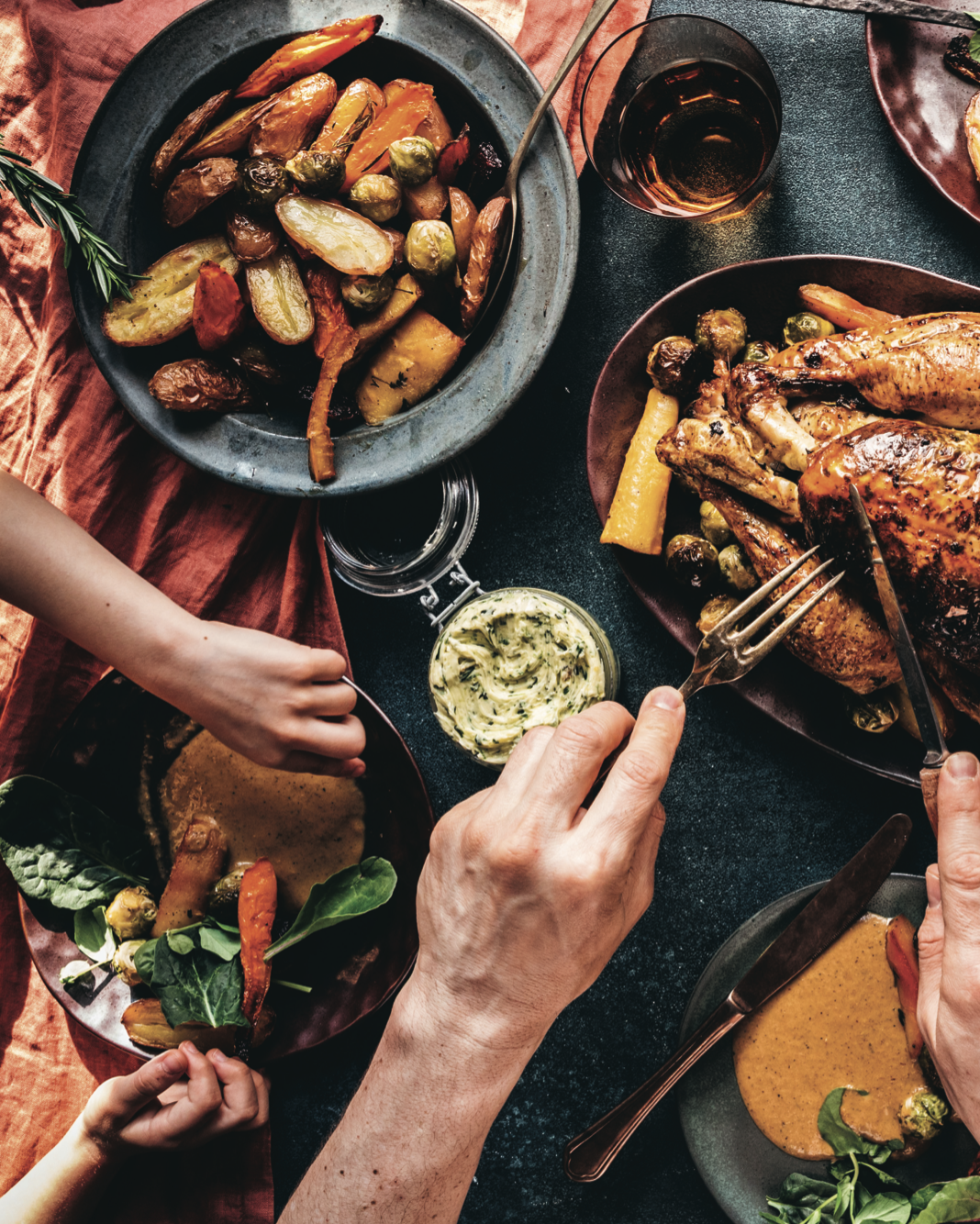
If you’ve got a copy of Toddler to Table, you might recognise this recipe! It’s inspired by our much-loved Lemon Butter Roast Chicken recipe, adapted for the slow cooker to make those busy days even easier. There’s something so comforting about a whole roast chicken, but standing over the oven for hours isn’t always practical. … Continued
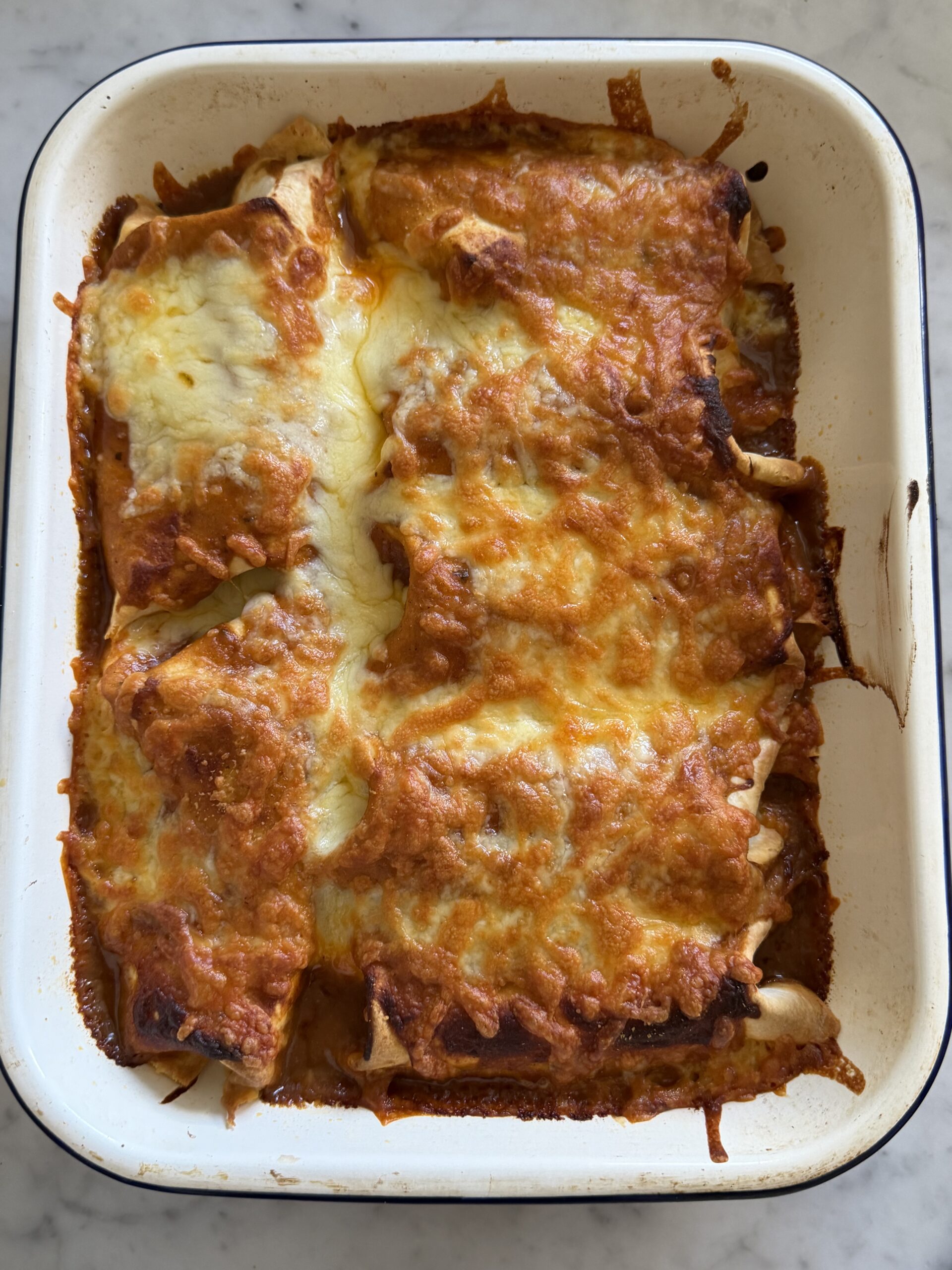
Leftover Enchiladas
These Leftover Enchiladas are one of our favourite ways to transform slow-cooked meat into an entirely new meal. Soft tortillas are filled with tender shredded meat, black beans, sweet corn and melty cheese, then baked under a rich homemade enchilada sauce until bubbling and golden. They’re comforting, nourishing, freezer-friendly and a brilliant way to stretch … Continued
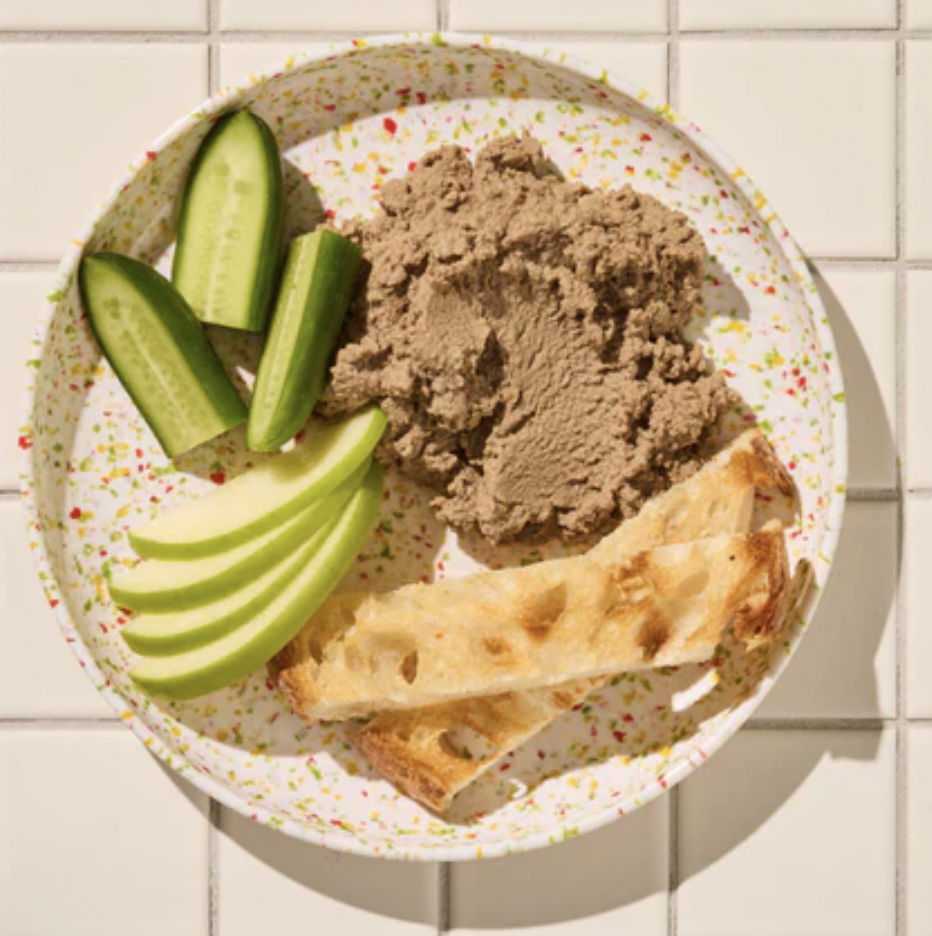
Baby Liver Pate
Introducing liver to babies doesn’t have to mean serving chunks of liver on a plate. This silky smooth pate is one of our favourite ways to introduce one of nature’s most nutrient-dense foods in a way that’s gentle, delicious and easy for little ones to enjoy. Chicken liver is one of the richest natural sources … Continued
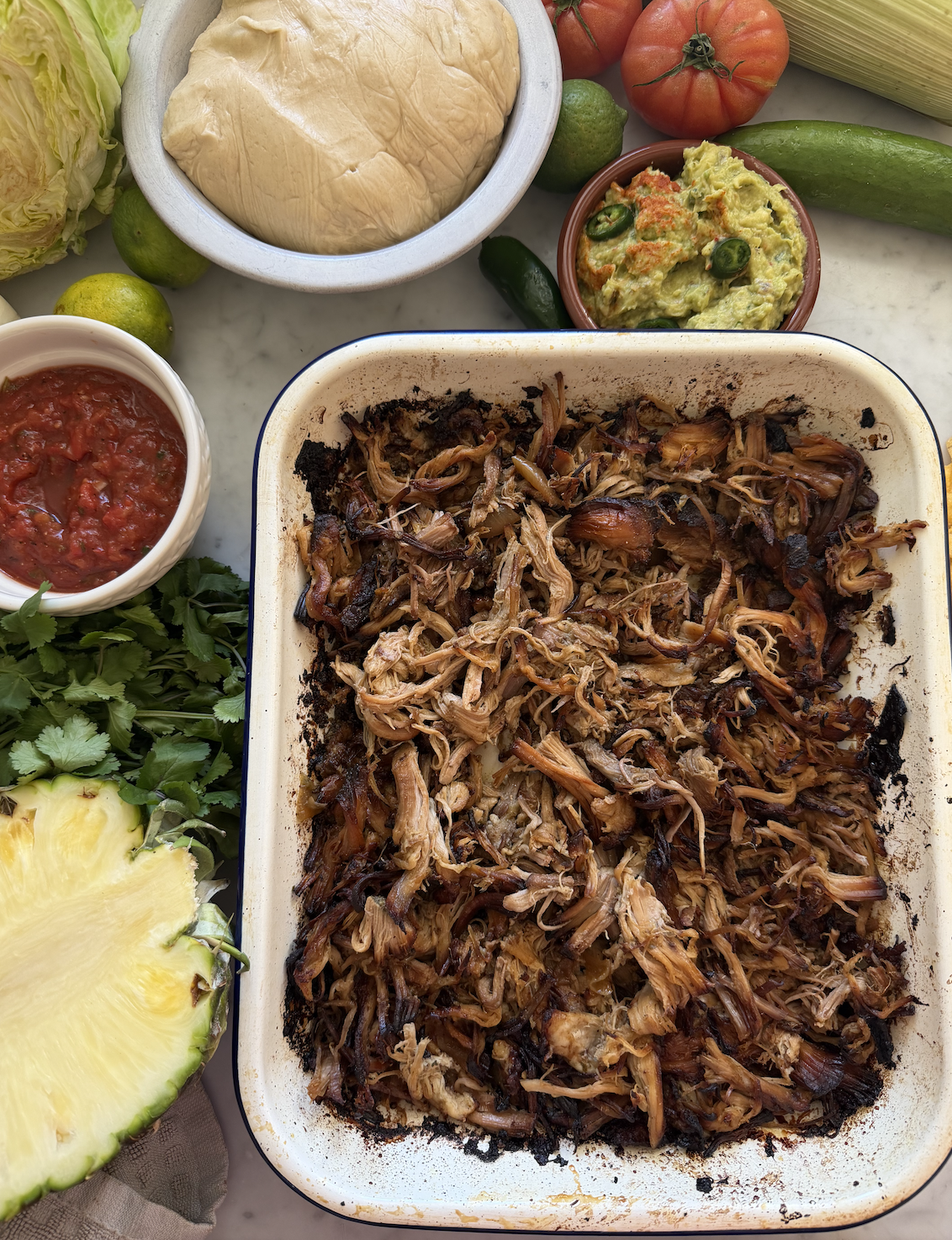
Slow-Cooker Pork Carnitas
If you’ve ever thought slow cooker meals had to be bland, watery or lacking flavour, this recipe is here to change your mind. These Slow Cooker Pork Carnitas are one of my favourite recipes because they deliver juicy, fall-apart pork with crispy, caramelised edges that taste like they’ve come straight from your favourite Mexican restaurant. … Continued
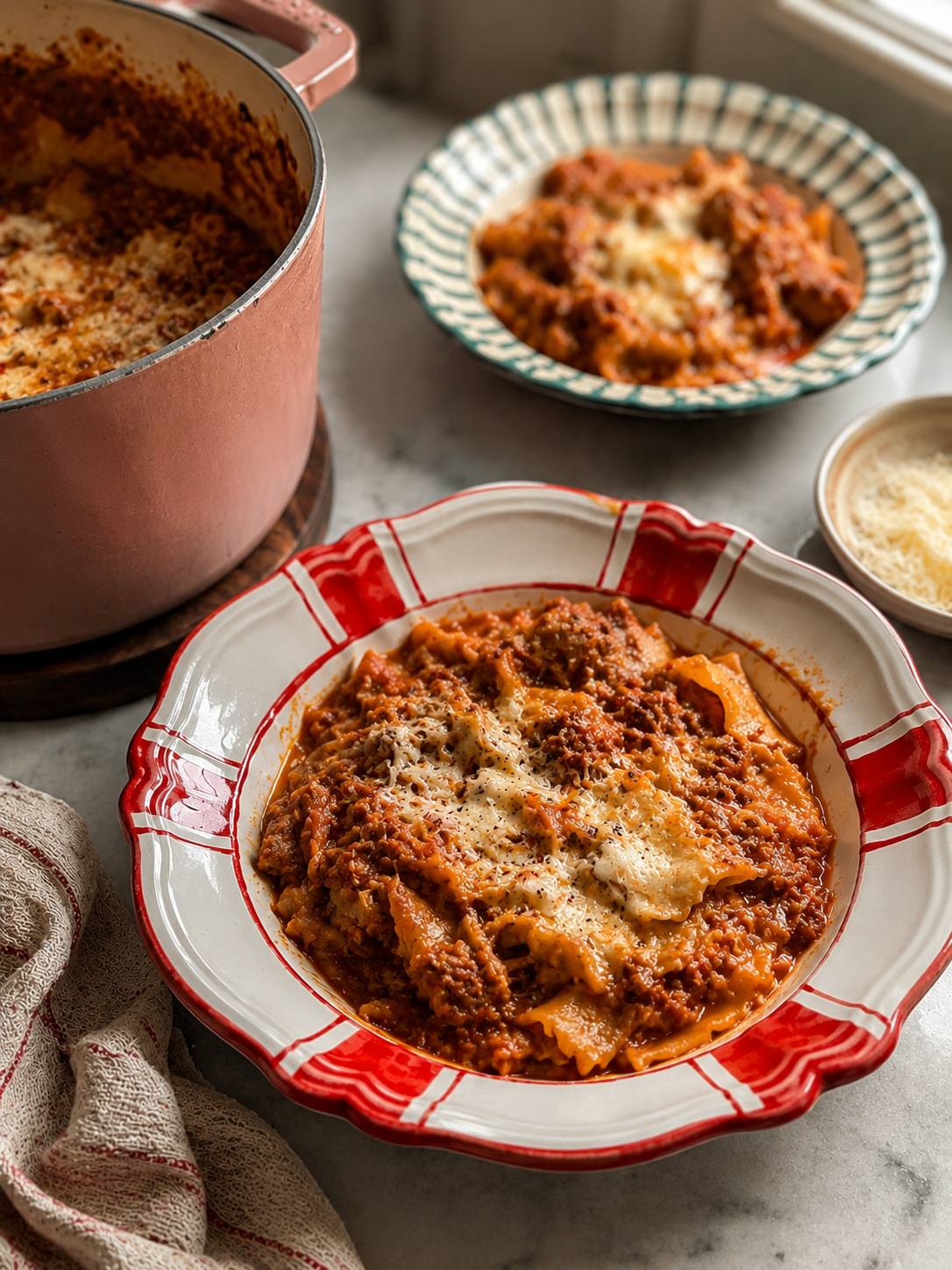
Lasagne Soup
This is one of those meals that tastes like you spent hours cooking… but really it’s just a throw-everything-in-a-pot situation. It has all the cosy flavours of lasagne without the layering, baking or dishwashing marathon. Rich tomatoey broth, tender pasta, hearty mince and creamy cheese on top… honestly the ultimate comfort food. I also love … Continued
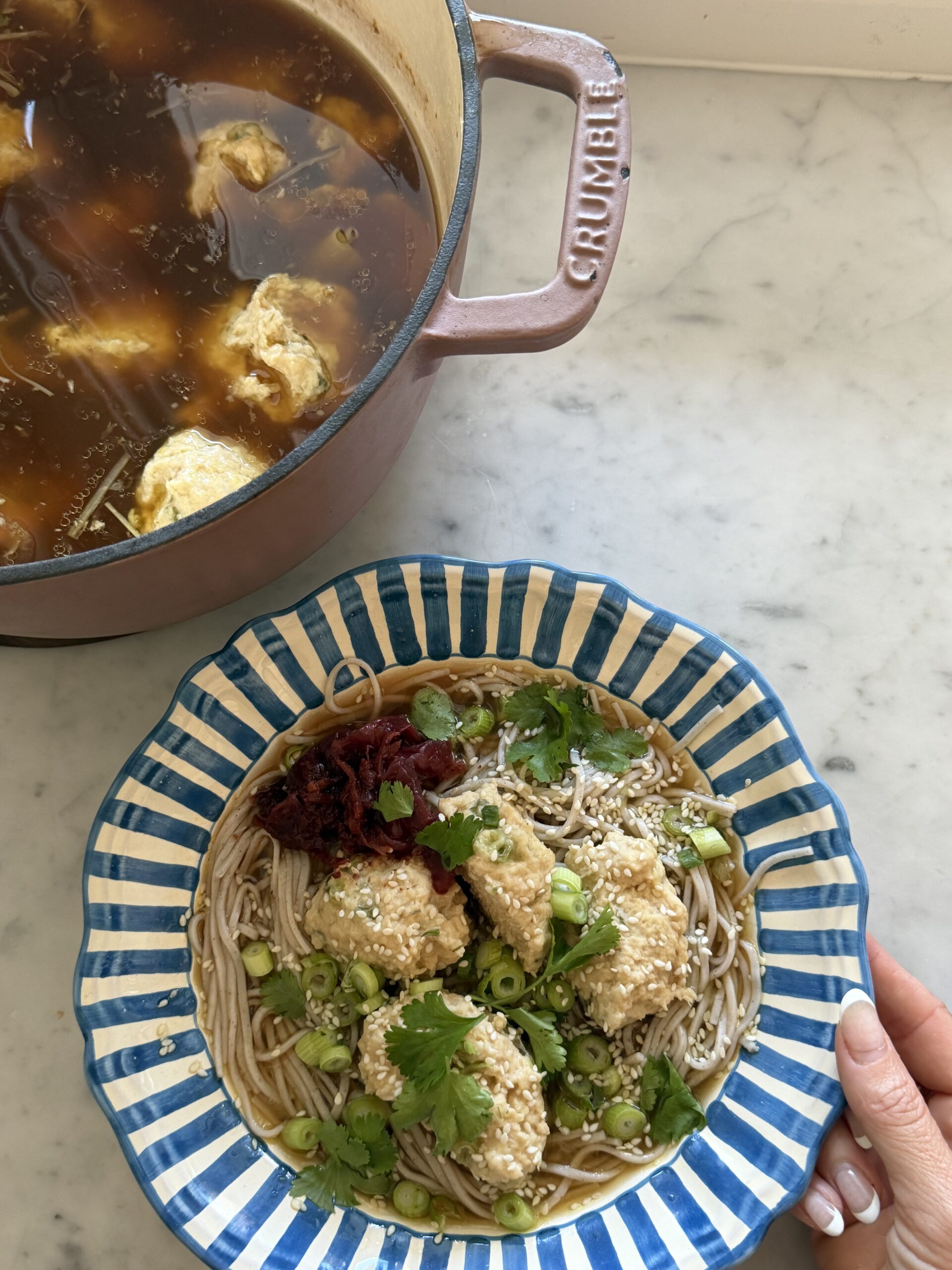
Chicken Meatballs in a Gingery Broth
This is one of those meals that feels a little bit special, but is actually so simple to make. The meatballs are soft and full of flavour, and cooking them directly in the broth not only keeps them incredibly juicy, but also adds so much depth to the soup itself. It’s the kind of dinner … Continued
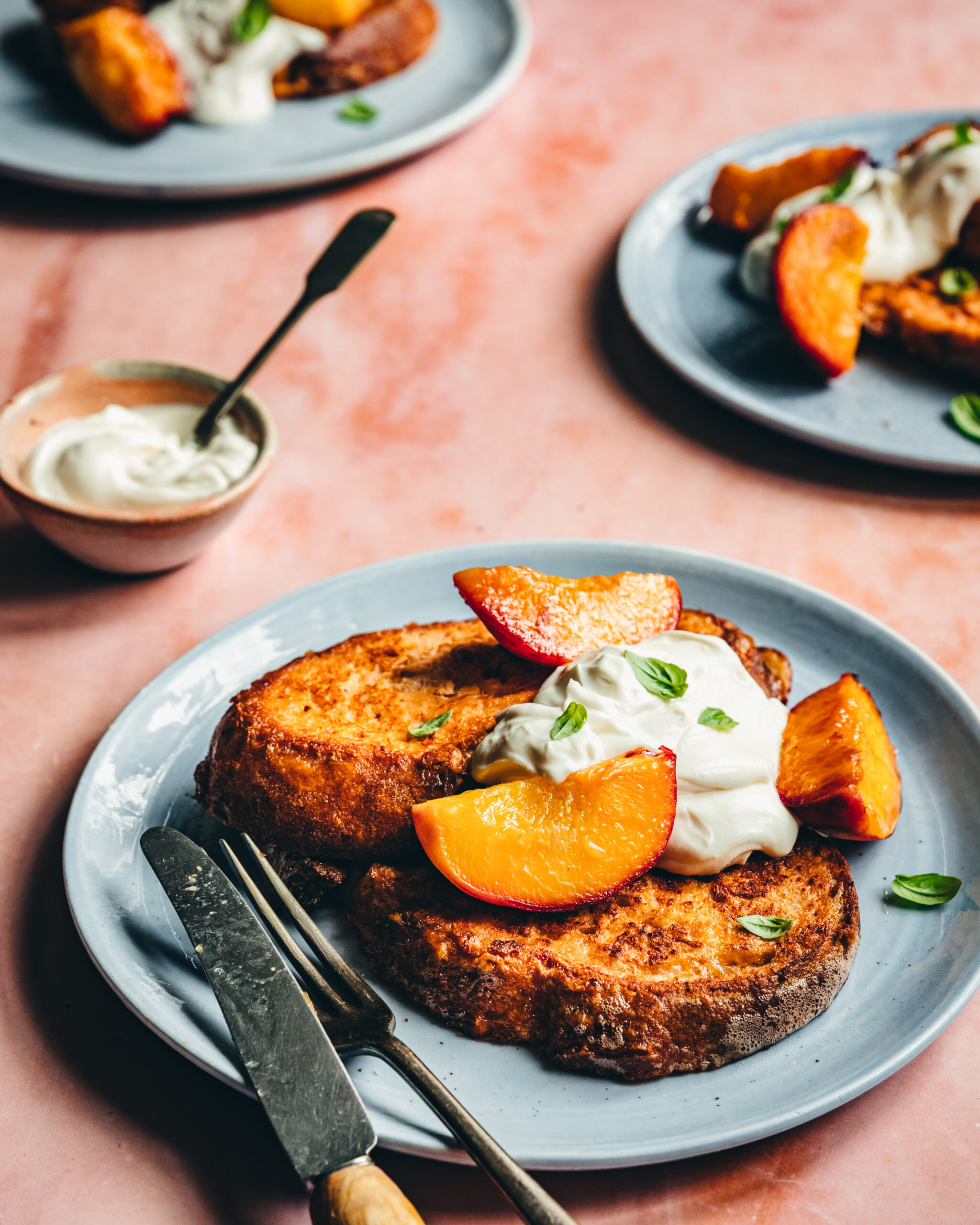
French Toast
There’s something so comforting about French toast, especially when it becomes one of those go-to meals you can rely on for everyone in the family. This version, from our book Toddler to Table, is exactly that. It’s simple, nourishing, and incredibly versatile. Whether you’re feeding a baby just starting solids, a busy toddler, or yourself … Continued
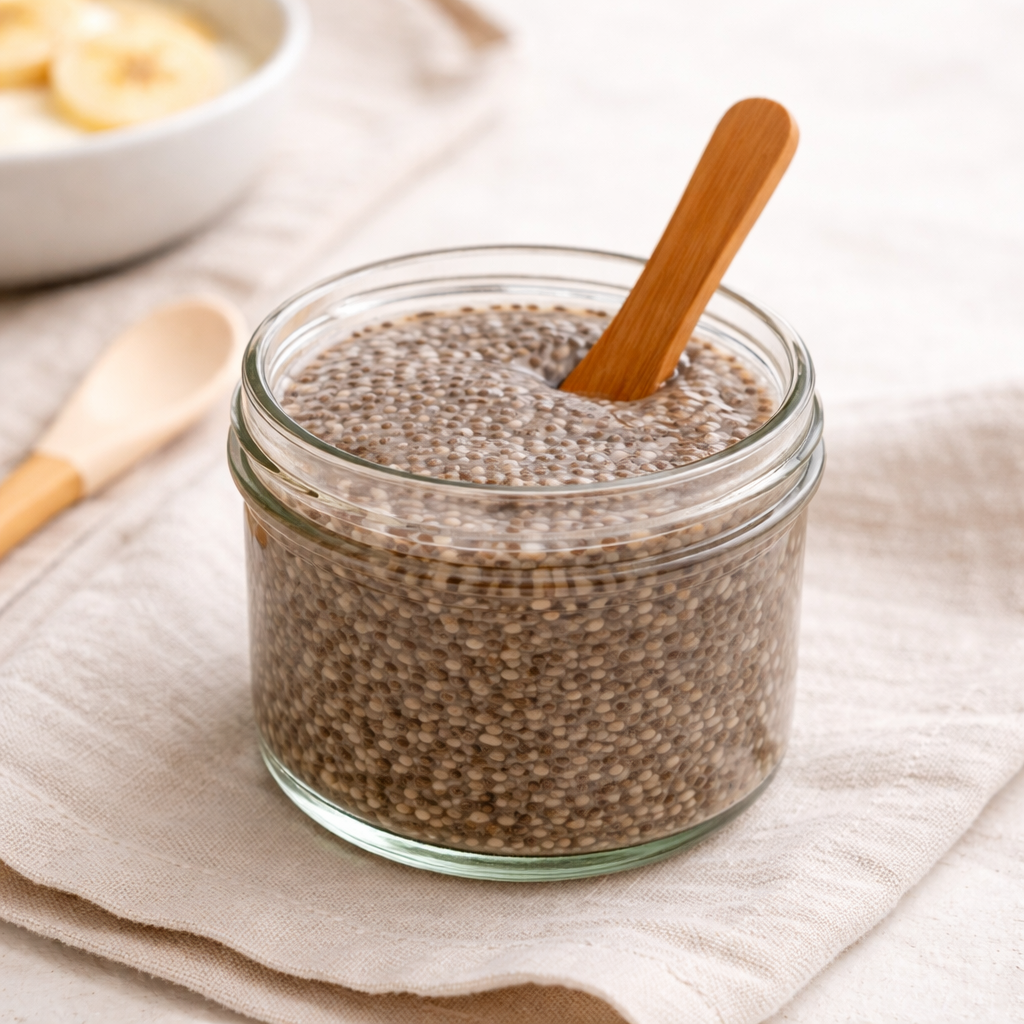
Chia Gel
Chia seeds are one of those small-but-mighty foods that we come back to again and again, especially when supporting little tummies through the transition to solids. They’re incredibly nutrient dense, meaning even a small amount delivers a beautiful boost of fibre, healthy fats, protein, calcium and magnesium. One of the biggest reasons we love chia … Continued