
Introducing Allergens to Your Baby
When, How & What to Watch For

Contents
- When Should You Introduce Allergens?
- How to Introduce Allergens Safely
- The Top 9 Allergens (and How to Offer Them)
- What Order Should You Introduce the Allergens?
- What Are the Signs of a Food Allergy in Babies?
- Immediate (IgE-Mediated) Allergic Reactions
- Non-IgE-Mediated (Delayed) Reactions
- FPIES
- Contact Reactions
- Food sensitivities
- Need Support Introducing Allergens?
- Podcast Listen
Back in stock
Toddler to Table now back in stock!
Your guide to bringing the family together, one meal (and delicious recipe) at a time.
Order nowIntroducing allergens to your baby can feel overwhelming, but food allergies are unfortunately becoming more common and one of the ways that we can reduce the risk of food allergy is through early and regular exposure to allergens. With the right information and support, it becomes a manageable and achievable part of starting solids.
In this guide, we’ll walk you through:
- When to introduce allergens
- How to introduce the top 9 allergens safely
- What allergic reactions look like
- What to do if a reaction occurs
This advice aligns with the 2026 Infant Feeding Guidelines from the Australasian Society of Clinical Immunology and Allergy (ASCIA).¹
When Should You Introduce Allergens?
Allergenic foods should be introduced soon after starting solids, which is usually around 6 months of age, but not before 4 months (when your baby is developmentally ready). Early introduction reduces risk, but unfortunately it doesn’t eliminate it entirely. Some babies will still develop food allergies despite ideal timing.
Before You Introduce Any Allergen:
- Only introduce allergens when baby is well
- Do not introduce an allergen as a baby’s very first food
- Introduce new allergens at home (not at daycare or restaurants)
- Avoid introducing allergens right before naps or bedtime – ideally time the exposure so that you can observe your baby for at least 2 hours after a new allergen¹
- Introduce one allergenic food at a time
How to Introduce Allergens Safely
1. Through the mouth
It’s important for a baby’s exposure to food allergens to be through the gastrointestinal system (ie. by eating them) rather than through the skin. That’s why we recommend avoiding skincare that contains food products or food proteins, especially prior to introducing allergens in solids. It’s also important to ensure that eczema is well controlled whilst introducing dietary allergens, so that allergens don’t come in contact with broken skin.¹
2. Introduce One at a Time
While you can introduce low-allergenic foods such as fruits, vegetables and meat in combination, allergenic foods should be offered individually at first. After your baby has three separated tolerated exposures, you can start to combine with other tolerated allergens (for example, combining egg, wheat and dairy in a pancake).
If a baby reacts to one allergen, it’s recommended not to offer that allergen again, but to continue introducing the others (unless a health professional recommends otherwise). For example, there is some cross reactivity amongst tree nuts so we recommend seeking medical advice before introducing other tree nuts, if your baby has reacted to one.
To make this easy, download our FREE Allergen Introduction Tracker – a simple, parent-friendly template to record foods, dates, exposures and any symptoms.
3. Continue Weekly Exposure
Early introduction is not enough – ongoing weekly exposure is essential.
The current ASCIA recommendation is to offer each allergenic food at least 3 times, and if there is no allergic reaction, continue to give that allergenic food to your baby once a week.1 This is to maintain tolerance.
Note: If you are breastfeeding, continue to do so through the introduction of solids where possible. This is recommended for overall infant health but can also act to reduce the risk of allergies developing.¹
The Top 9 Allergens (and How to Offer Them)
These foods account for approximately 90% of childhood food allergies.
1. Egg
Prioritise early introduction (around 6 months).
How to offer:
- Well-cooked scrambled egg
- Hard-boiled egg mashed/blended into a tolerated puree
- Fully cooked omelette strips
Try: Our wakame omelette

2. Peanut
Prioritise early introduction (around 6 months).
How to offer:
- Smooth peanut butter thinned with warm water, breastmilk, formula or puree
- Peanut powder stirred into a puree
- Peanut butter spread onto a well tolerated finger food
Do not offer whole nuts (choking risk).
3. Tree Nuts
Almonds, cashews, walnuts, pistachios, macadamias, Brazil nuts, hazelnuts, pecans, pine nuts
Introduce each nut individually.
How to offer:
- Smooth nut butters thinned with warm water, breastmilk, formula or puree
- Finely ground nut “dust” mixed into a puree
Never offer whole nuts (choking risk).
4. Sesame
How to offer:
- Hulled tahini thinned thinned with warm water, breastmilk, formula or puree
5. Fish
Best choice: Low-mercury, nutrient-dense fish like sardines, salmon and mackerel.
How to offer:
- Flaked/mashed into avocado or a puree
- Serve as finger food in soft, large flakes

6. Shellfish
Crustaceans (prawns, lobster, crab) + molluscs (oysters, mussels, scallops).
Introduce crustaceans and molluscs individually.
How to offer:
- Finely minced prawn
- Canned oysters/mussels mashed or blended into avocado or a puree
Try: this prawn pancake

7. Soy
How to offer:
- Pan fried tempeh cut into strips
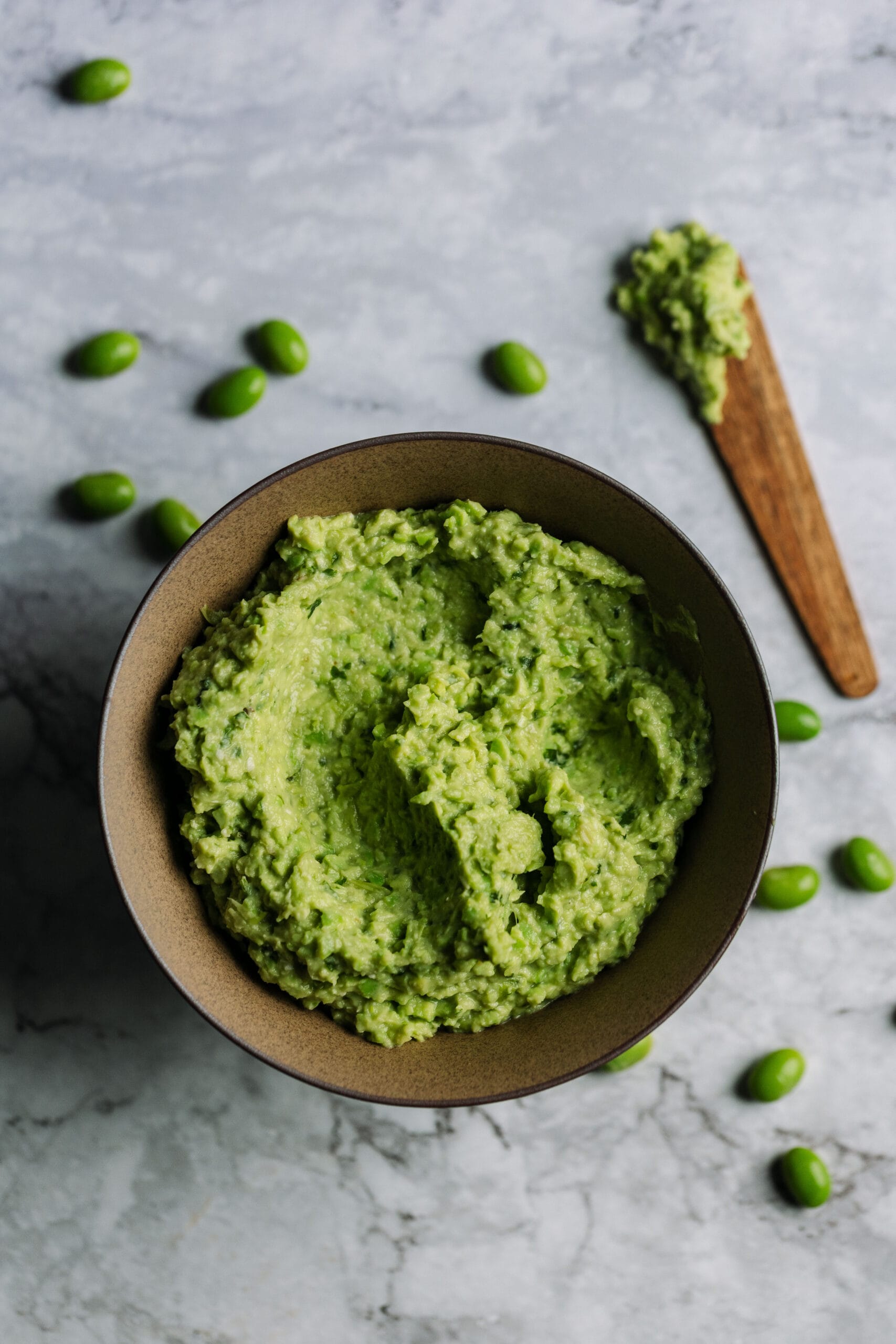
- Edamame can be blended into purees
Try: This edamame and avocado puree
8. Dairy
How to offer:
- Greek yoghurt served as is
- Butter mixed through purees
- Kefir can be added to a puree
Read more about introducing dairy here.
9. Wheat
How to offer:
- Wholemeal or sourdough bread fingers
- Wholemeal pasta
What Order Should You Introduce the Allergens?
ASCIA 2026 guidelines emphasise prioritising egg and peanut as these two foods have the strongest evidence for allergy prevention. Large studies show that introducing peanut and egg in the first year of life significantly reduces the risk of IgE-mediated food allergy.² After this, all other common allergens should ideally be introduced before 12 months of age.¹
At Boob to Food, we recommend this order as it prioritises ease of digestion, nutrient density and it is in line with the ASCIA guidelines. But if your family eats a certain food more often, and it’s later on the list, it is reasonable to start with that food so your little one can enjoy meals with you.
- Egg
- Peanuts
- Tree nuts
- Sesame
- Fish
- Shellfish
- Soy
- Dairy
- Wheat
What Are the Signs of a Food Allergy in Babies?
There are four broad categories of reactions parents should be aware of.
Immediate (IgE-Mediated) Allergic Reactions
This refers to anaphylaxis and other severe allergic reactions which are caused by cells in our immune system reacting to specific food proteins. These reactions typically occur within minutes; occasionally up to 2 hours after ingestion. We would usually see IgE mediated allergic reactions on the second/third or occasionally more subsequent exposures to a new allergen.
Symptoms develop rapidly and may include:
- Hives (urticaria), especially widespread (ie. not just where the food has touched)
- Swelling of lips, eyes, face or tongue
- Vomiting (particularly alongside other symptoms)
- Coughing, wheezing
- Pale, floppy appearance
Signs of anaphylaxis include:
- Breathing difficulty
- Severe tongue swelling
- Limpness or collapse
This is a medical emergency.
What To Do:
- Stop the food immediately, wipe babies hands/face with cold water and remove baby from the highchair.
- Call an ambulance
- If available, administer an adrenaline auto-injector (e.g. EpiPen)
- Lay your baby flat unless breathing is difficult
Do not reintroduce the food unless advised by your GP or allergist.
Your doctor will provide an anaphylaxis management plan, prescription for adrenaline auto-injector and arrange specialist referral¹.
Non-IgE-Mediated (Delayed) Reactions
These involve different pathways and cells of the immune system; activated in the gastrointestinal system. Reactions are usually not life-threatening, but still require medical review. These include food protein intolerances in breastfed babies and FPIES (food protein induced enterocolitis syndrome). Coeliac disease could also be considered a non IgE mediated food allergy.
Non IgE mediated allergies can result from exposure to the top 9 allergens listed above, but also from other foods like grains.
Symptoms typically appear later – from 2 hours after exposure and potentially up to several days later.
Common features include:
- Vomiting
- Diarrhoea
- Mucus or blood in stools
- Constipation (less common)
- Eczema flares
What To Do:
- Document your little one’s symptoms including any photos of rashes or nappies; if relevant.
- See your GP who might refer you to an allergist or paediatrician. Often the plan involves removing the food protein altogether temporarily, and reintroducing it via a “ladder” when the baby is older. This should always be done with the support of a health professional.
- A dietitian can also help with a reintroduction plan and making sure that you and your little one are getting the nutrition that you need in the meantime; if foods are being avoided. You can book an appointment with one of our paediatric dietitians here.
- It’s usually safe (and important!) to continue introducing and re-offering other allergens and foods.
FPIES
Food Protein Induced Enterocolitis Syndrome (FPIES) is a rare non-IgE mediated gastrointestinal food hypersensitivity disorder that primarily affects infants and young children. It presents as recurrent severe episodes of vomiting and diarrhoea about 1-4 hours after ingestion of a triggering food protein (symptoms can occur up to 8 hours after ingestion but this is rare). Babies are often pale and floppy and may require treatment in hospital, but fortunately recover relatively quickly. The first episode is often misdiagnosed as gastroenteritis but an allergy pattern is more obvious after repeated episodes. Any food can trigger FPIES. The most common triggers for infants and children are rice, oat, cow’s milk and egg.3
What To Do:
- It’s often appropriate to present immediately to hospital if your child appears unwell during the episode – sometimes babies will need rehydration and/ or medications to stop their vomiting
- Avoid giving the suspected food again
- Document symptoms closely
- Book a GP appointment
- You may be referred to a paediatrician, allergist or dietitian
- If your baby has an FPIES reaction to one food, you can usually continue introducing other foods and allergens unless advised otherwise.
Contact Reactions
These occur when sensitive infant skin is irritated by food touching the skin. These reactions are common and usually mild. Common triggers include citrus, berries, tomatoes, nightshades and stone fruit.
You may see:
- Redness around the mouth
- Mild hives only where food touched
This is not usually a true allergy¹ and as such we would not expect to see other associated symptoms such as wheeze, mouth/ facial swelling, vomiting, difficulty breathing or widespread hives.
What To Do:
- It is usually safe to try the food again if there are no other symptoms suggesting an allergy
- Reduce the risk by using a barrier cream on your baby’s face prior to giving potentially irritating foods
- Avoid other skin irritants on your baby’s face such as baby wipes or soaps (clean their face with just water, if possible)
- Closely monitor for other symptoms of allergy listed in the IgE allergen section.
- Document symptoms including photos of the rash, to show a health professional if needed
Food sensitivities
Sometimes people can react to certain foods and have symptoms that are similar to an allergy, such as diarrhoea or mild rashes. Symptoms are not usually caused by the immune system but rather are due to difficulties digesting/ absorbing some foods (as is the case for lactose or gluten intolerance), reactions to chemicals in food (such as caffeine or MSG) or reactions to preservatives (such as sulfites). Certain preservatives can also rarely trigger asthma or anaphylaxis.
What To Do:
If possible, we try to avoid cutting foods out completely for a long duration if there’s not an allergy – because doing this can in fact increase the risk of an allergy in the longer term. For example, if you’ve noticed your little one has a sensitivity to lactose or gluten, it may be that they can tolerate small amounts in certain foods; to allow ongoing exposure to the wheat and dairy proteins. If you’re concerned that your little one has a food sensitivity, we strongly recommend getting some support with a plan and this is something our team in the Boob to Food clinic can help with.
Need Support Introducing Allergens?
You don’t have to do this alone.
If you’re feeling unsure, anxious, or want a personalised allergen introduction plan, we have an online clinic, where our practitioners can guide you through:
- Identifying any food sensitivities/intolerances
- Create personalised dietary plans to ensure nutritional adequacy whilst eliminating allergens
- Creating a tailored allergen timeline
- Supporting baby’s gut health
- How to read food labels confidently
- Managing eczema, reflux or family allergy history
Book a consultation here.
And if you want the full roadmap, evidence, recipes and feeding philosophy in one place, you’ll love our bestselling book Milk to Meals – your complete guide to starting solids.
Podcast Listen
We have quite a few podcasts you can listen to on introducing allergens with Dr. Chaitanya Bodapati, a dual-trained paediatric allergist/immunologist and general paediatrician.
Introducing allergens
In this episode we discuss:
- When and how to start introducing allergens
- Why timing matters (but also why you don’t need to panic)
- How often allergens should be offered and in what quantity
- What to do if your baby spits the food out (again!)
- How to approach allergens when you have dietary restrictions or food avoidance in your family
- Whether it’s necessary to introduce every single tree nut individually
- What to do if your baby is unwell, or if there’s a family history of allergy
- What reactions to look out for and when to seek help
What to do if your child has a reaction
In this episode we discuss:
- The signs and symptoms of an allergic reaction vs a sensitivity or contact rash
- What to do if your child reacts to a food
- When (and when not) to seek medical help
- How to manage mild, moderate, and severe reactions
- Whether you need to stop introducing other allergens after a reaction
- The role of skin prick and blood testing—and why they’re often misleading
- What FPIES is, how it differs from other allergies
- Whether your child is likely to outgrow a food allergy
- When an EpiPen is (and isn’t) necessary
- Why the only true way to diagnose an allergy
Allergy FAQs
In this episode we discuss:
- Breastfeeding with food allergies
- The difference between an allergy and an intolerance
- How to manage eczema when introducing solids and allergens
- If food-based skincare products (like almond oil or coconut oil) increase the risk of allergies
- Whether what you eat in pregnancy or breastfeeding affects your baby’s allergy risk
- Why formula-fed babies may already be exposed to some allergens
- What oral immunotherapy is and who it might be suited to
- Why food allergy desensitisation is becoming more common in Australia
References
- Australasian Society of Clinical Immunology and Allergy (ASCIA). Infant Feeding for Food Allergy Prevention Guidelines, 2026.
- Scarpone R, et al. Timing of Allergenic Food Introduction and Risk of IgE-Mediated Food Allergy: A Systematic Review and Meta-analysis. JAMA Pediatrics. 2023;177(5):489–497.
- Australasian Society of Clinical Immunology and Allergy (ASCIA). Food Protein-Induced Enterocolitis Syndrome (FPIES), accessed 18/2/26, https://www.allergy.org.au/patients/food-other-adverse-reactions/food-protein-induced-enterocolitis-syndrome-fpies



Back in stock
Toddler to Table now back in stock!
Your guide to bringing the family together, one meal (and delicious recipe) at a time.
Order now
The Division of Responsibility
A framework that makes feeding feel calmer and clearer

Formula
Helping you choose the right one for your baby

Iron for babies
Why they need it, how much they need, and how to ensure they're getting enough

Morning Sickness
Practical tips to reduce nausea and stay nourished through the first trimester.

Building a Resilient Immune System
Food, Lifestyle + When to Seek Support
Picky Eating
What To Do and When Is It a Problem?
Add a comment
Show Comments
0Leave a Comment
Your email address will not be published. Required fields are marked *