

The Division of Responsibility
A framework that makes feeding feel calmer and clearer

Contents
Back in stock
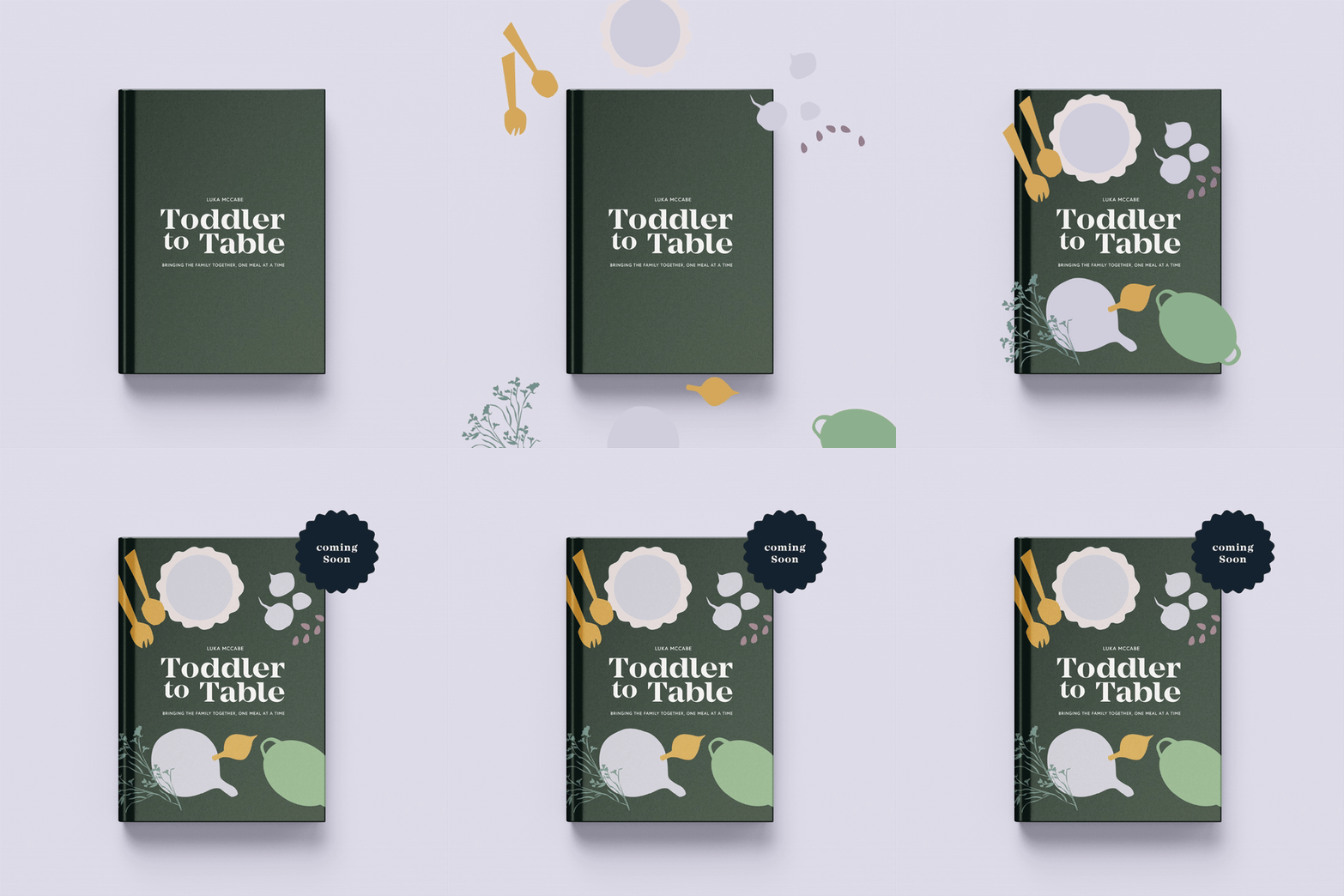
Toddler to Table now back in stock!
Your guide to bringing the family together, one meal (and delicious recipe) at a time.
Order nowIf you’ve ever sat at the table wondering whether you should offer another bite, make a different meal, or worry that your little one hasn’t eaten enough… you’re not alone.
Feeding babies and toddlers can feel surprisingly complicated. One day they happily try everything, the next they refuse foods they loved yesterday. Many parents end up questioning themselves at every meal.
One framework that can make feeding feel calmer and clearer is the Division of Responsibility in Feeding.1 It takes the pressure off both parents and children by defining who is responsible for what at mealtimes.
In this blog, we’ll walk you through what the Division of Responsibility is, why it matters for raising intuitive eaters, and how it looks in practice when starting solids and navigating the toddler years.
What Is the Division of Responsibility in Feeding?
Developed by dietitian and family therapist Ellyn Satter, the Division of Responsibility in Feeding (DOR) is a clear and compassionate structure for mealtimes, one that protects both nutritional intake and a child’s developing autonomy.
DOR simply clarifies roles at the table.
Parents are responsible for:
- What food is offered
- When food is offered
- Where food is eaten
Children are responsible for:
- Whether they eat
- How much they eat
Why This Matters
Babies are born with an innate ability to regulate their intake according to hunger and fullness cues.2 When feeding remains responsive and structured, this internal regulation is preserved. However, when pressure, bribing, negotiating or tightly restricting foods enter the picture, research shows that children’s self-regulation can be disrupted.3,4 When we override a child’s “I’m done” with “just one more bite,” we may unintentionally teach them to ignore what their body is telling them.
Feeding is not just about calories. It is sensory, relational and deeply connected to interoception – the body’s ability to sense internal signals like hunger, fullness, thirst and satiety. These internal cues form the foundation of lifelong eating competence.
Over time, the goal is not simply broader food variety. It is to raise a happy eater who:
- Trusts their tummy
- Feels safe and calm around food
- Enjoys a wide variety of foods
- Can self-regulate intake
- Knows how to listen to and nourish their body
- Enjoys eating meals with the family
What It Looks Like When Starting Solids
You decide:
- The foods on offer
- What type of approach you are using – spoon feeding, baby led weaning or a combination
- The timing of meals and milk feeds
- The supportive seating environment
- Family mealtimes and modelling
Your baby decides:
- Whether food is brought to their mouth
- How much is eaten
- When they are finished
Yes, sometimes that means they eat two bites and then suddenly begin turning their heads away or throwing food. That does not mean you have failed, it means they are listening to their body.
How the Division of Responsibility Helps with Fussy Toddlers
As children move into toddlerhood, the framework itself does not change, but the way it looks in reality often changes. Growth slows, appetite becomes more variable and autonomy expands rapidly. A toddler who once ate widely may now refuse familiar foods or insist on the same meal repeatedly.
In this stage, applying the Division of Responsibility looks like continuing to decide:
- What is served – offering balanced meals that include both familiar foods and foods that are “learning” foods or less preferred foods
- When food is offered – maintaining predictable meals and snacks rather than responding to every request for grazing
- Where food is eaten – seated, present, with minimal distraction, and hopefully with other members of the family
And allowing your toddler to decide:
- Whether they eat from what is offered
- How much they eat
In practice, this may look like placing a small portion of a new food on the plate without drawing attention to it or commenting on whether it is eaten. It may involve pairing a familiar food with one that is still being learned, ensuring the meal feels manageable rather than overwhelming. It may also mean calmly concluding a meal when your toddler indicates they are finished, trusting that another structured eating opportunity is approaching.
The evidence supports this approach. Repeated, low pressure exposure is associated with increased food acceptance over time.5 In contrast, pressure to eat, even when delivered gently, is associated with reduced intake and increased resistance.6 Shifting the focus from one successful meal to the long term goal of raising lifelong intuitive eaters is key.
Predictability is particularly important during toddlerhood. Scheduled meals and snacks support appetite regulation and reduce grazing, which can blunt hunger cues. When children trust that food will be offered regularly and reliably, urgency decreases. This predictability allows them to remain more attuned to internal hunger and fullness signals, even when appetite fluctuates from day to day.
The toddler years are often characterised by variability. Intake may differ across meals and across days and preferences may narrow temporarily. However, the framework remains consistent. Parents continue to provide structure, variety and consistency. Our little ones continue to practise responding to internal cues within that structure.
When to Seek Additional Support
The Division of Responsibility is appropriate for most typically developing children, including those who move through periods of selective or fussy eating. Variability in appetite, food jags, and refusal of previously accepted foods are common in toddlerhood and do not necessarily indicate a feeding disorder.
However, further assessment may be warranted if you notice:
- Eating to the point of vomiting or frequent tummy aches after meals
- Persistent choking, gagging or coughing during meals
- Ongoing difficulty managing textures beyond what is developmentally expected
- Significant distress or anxiety around food
- A very limited range of accepted foods that continues to narrow
- Poor weight gain or weight loss
- Mealtimes that are consistently highly stressful despite structured and responsive approaches
In these cases, consultation with a paediatrician, GP or feeding trained allied health professional (occupational therapist, speech pathologist or dietitian) can provide individualised guidance.
Want Practical Ways to Apply This at Home?
If this framework resonates with you and you’d like practical ways to apply it in everyday family life, our book Toddler to Table expands on this approach in much more detail.
Inside the book, we guide you through:
- How to structure meals and snacks using the Division of Responsibility
- Supporting fussy eaters without pressure or bribing
- Creating positive family mealtimes
- Building variety and confidence with food over time
It’s designed to help parents move from feeling uncertain at the table to feeling calm and confident about how to feed their growing toddler.
You can find Toddler to Table here
References
- Ellyn Satter Institute (2022). Raise a healthy child who is a joy to feed. https://www.ellynsatterinstitute.org/how-to-feed/the-division-of-responsibility-in-feeding/
- Birch, L. L., & Fisher, J. O. (1998). Development of eating behaviors among children and adolescents. Pediatrics, 101(3 Pt 2), 539–549.
- Faith, M. S., Scanlon, K. S., Birch, L. L., Francis, L. A., & Sherry, B. (2004). Parent-child feeding strategies and their relationships to child eating and weight status. Obesity Research, 12(11), 1711–1722. https://doi.org/10.1038/oby.2004.212
- Ventura, A. K., & Birch, L. L. (2008). Does parenting affect children’s eating and weight status? International Journal of Behavioral Nutrition and Physical Activity, 5(15). https://doi.org/10.1186/1479-5868-5-15
- Wardle, J., Herrera, M.-L., Cooke, L., & Gibson, E. L. (2003). Modifying children’s food preferences: The effects of exposure and reward on acceptance of an unfamiliar vegetable. European Journal of Clinical Nutrition, 57(2), 341–348. https://doi.org/10.1038/sj.ejcn.1601541
- Birch, L. L., & Fisher, J. O. (1998). Development of eating behaviors among children and adolescents. Pediatrics, 101(3 Pt 2), 539–549.



Back in stock
Toddler to Table now back in stock!
Your guide to bringing the family together, one meal (and delicious recipe) at a time.
Order now
Slow-Cooking 101
There’s something incredibly satisfying about throwing a few simple ingredients into a slow cooker, walking away, and coming back to a meal that tastes like you’ve spent hours in the kitchen. Slow cooking is one of our favourite ways to cook. It’s budget-friendly, requires very little hands-on time and is one of the easiest ways … Continued

Introducing Allergens to Your Baby
When, How & What to Watch For

Formula
Helping you choose the right one for your baby

Weaning
How to wean your baby from breastmilk to a balanced diet
Dairy – Cows Milk
How to introduce dairy to babies, and is cows milk necessary in a toddlers diet?

Food Refusal
When a Toddler Refuses a Previously Preferred Food

Add a comment
Show Comments
0Leave a Comment
Your email address will not be published. Required fields are marked *