
Gagging vs Choking
What Every Parent Needs to Know When Starting Solids

Contents
Back in stock
Toddler to Table now back in stock!
Your guide to bringing the family together, one meal (and delicious recipe) at a time.
Order nowStarting solids with your baby is an exciting milestone, but many parents worry about the risks of gagging and choking. While both can be distressing to witness, it’s crucial to understand that they are very different situations. If following a baby led weaning approach (BLW), parents biggest concern is often choking. However, studies have shown that when finger foods are offered in a safe and appropriate way there is no increase in incidences of choking for BLW versus traditional spoon-feeding approaches.1 By learning how to respond appropriately, you can ensure mealtimes are safe and enjoyable for both you and your baby.
Gagging: A Normal Reflex
Gagging is a natural, developmental reflex that helps babies prevent choking. Although it can look alarming, it’s actually a sign that your baby’s body is doing its job to protect the airway. Gagging is typically caused when food or an object touches the back of the throat, triggering a reflex that forces the object out of the mouth.
Signs of gagging include:
- Coughing
- Retching or vomiting
- Skin turning red
Gagging is common in babies, especially as they learn to eat finger foods. Between 6 to 12 months, babies’ gag reflexes move further back in the mouth, meaning they may gag less as they grow older. This reflex helps babies learn how to take smaller bites, chew more thoroughly, and become more aware of what they can safely swallow.
It’s important to remember that gagging is not a sign of choking, and babies may gag whether they’re eating purees or finger foods. If your baby is gagging frequently or still gagging after several months, it might be helpful to consult a feeding specialist.
Choking: A Serious, Life-Threatening Emergency
Choking, on the other hand, is a medical emergency. Unlike gagging, choking is silent and can prevent your baby from breathing, which is dangerous and requires immediate intervention.
Signs of choking include:
- Inability to cry or make noise
- Difficulty breathing or wheezing
- Skin turning blue or grey
- High-pitched sounds or gasping
- Wheezing
Choking occurs when food or an object completely blocks the airway, depriving the body of oxygen. Foods that are round or ball-shaped (like grapes) are particularly risky. Always ensure food is offered in safe shapes and textures to reduce the risk.
Read more about serving foods in safe shapes, sizes and textures here.
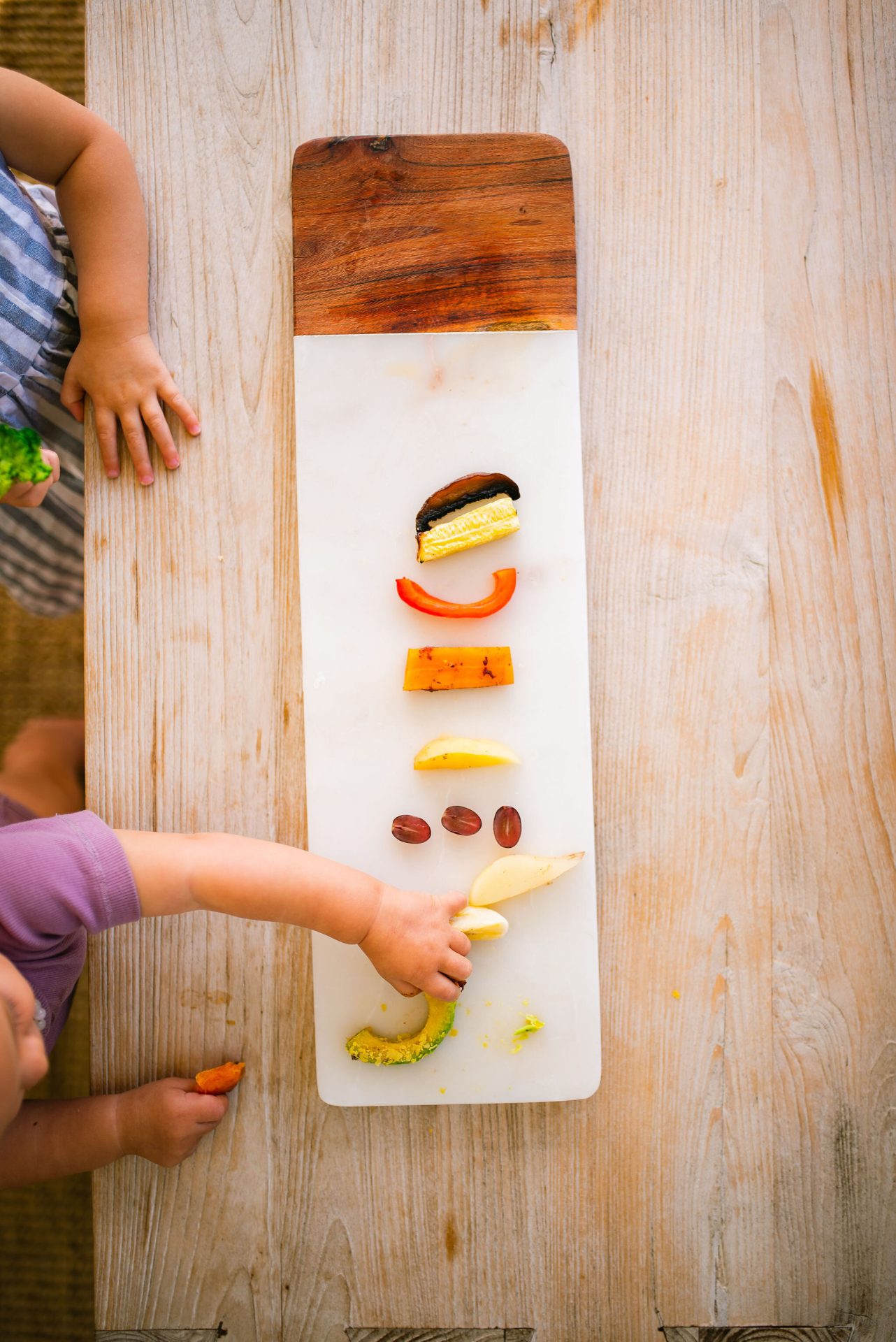
Preventing Choking: Safe Eating Practices
- Consider the environment: Creating a safe eating environment is key to preventing choking. Always feed your baby in a seated position, ideally in a high chair, and ensure they are fully focused on eating. This helps avoid distractions that could increase the risk of choking.
- Keep your baby in control: Whether spoon feeding or baby led weaning (BLW), make sure your baby is in control of what goes into their mouth so that their brain is aware that food is entering it. It is ok to pass your baby the food or the spoon if they need some help, but your baby should be the one to put the food in their mouth.
- Teach the concept of “spit out”: Practice the concept of “spitting-out” away from the table and away from emergency like situations. Teach your baby to spit food out when you hold your hand out in front of their mouth.
- Don’t move around while eating: You should also avoid letting your baby eat while moving around, crawling, or playing. They need to concentrate on the act of eating so their body can respond appropriately when food enters the mouth.
- Supervise closely: Always supervise your baby while they’re eating. If they take a big bite, give them time to work it out – most of the time, they’ll gag (a natural reflex) and manage to push it forward on their own.
What to Do if Your Baby Is Gagging
If your baby is gagging, resist the urge to intervene immediately. Trying to remove the food with your fingers could push it further down the throat. Instead, stay calm and allow your baby’s natural gag reflex to expel the food. Gagging is usually more concerning for parents than it is for the baby, and it typically resolves on its own.
After gagging, if your baby is upset, offer comfort and reassurance. A cuddle and a calm voice can help them feel safe and secure. Make sure your baby is always supervised while eating and is in an upright position when consuming food.
What to Do if Your Baby Is Choking
If your baby is choking, immediate action is required. You will need to perform infant first aid (back blows and chest thrusts) and call emergency services immediately. If you are alone, put the phone on speaker so you can talk to the operator while performing the necessary first aid.
If you’re not confident in your ability to perform infant CPR or choking first aid, it’s highly recommended to take a baby first aid course before introducing solids to your baby.
Final Thoughts: Stay Calm and Prepared
While it’s normal to worry about choking, it’s important to remember that gagging is part of the learning process and not a cause for alarm. By offering safe, appropriately-sized foods, ensuring your baby is seated properly, and supervising mealtimes, you can minimize the risk of choking and help your baby navigate their solid food journey safely. And if you ever feel uncertain, don’t hesitate to seek professional guidance.
Understanding the difference between gagging and choking—and how to respond in each case—can give you the confidence to enjoy mealtimes with your baby without fear.
Want to learn more? Listen to our podcast episode on Gagging vs Choking with Nicole from Rhythm First Aid
References
- Daniels L, Heath AL, Williams SM, Cameron SL, Fleming EA, Taylor BJ, Wheeler BJ, Gibson RS, Taylor RW. Baby-Led Introduction to SolidS (BLISS) study: a randomised controlled trial of a baby-led approach to complementary feeding. BMC Pediatr. 2015 Nov 12;15:179. doi: 10.1186/s12887-015-0491-8. PMID: 26563757; PMCID: PMC4643507.
- Centers for Disease Control and Prevention. (n.d.). Choking hazards: Foods and drinks for infants and toddlers. Centers for Disease Control and Prevention. https://www.cdc.gov/infant-toddler-nutrition/foods-and-drinks/choking-hazards.html, accessed 5/1/25.



Back in stock
Toddler to Table now back in stock!
Your guide to bringing the family together, one meal (and delicious recipe) at a time.
Order now
Premature Babies
When to start solids and what to expect.
Baby Food Pouches
Food pouches are so convenient but are they doing more harm than good?

Dairy – Cows Milk
How to introduce dairy to babies, and is cows milk necessary in a toddlers diet?
Bone Broth/Meat Stock
Everything you need to know about bone broth
Tongue Ties
What should you do?

Cups for Babies & Toddlers
What You Need to Know
Add a comment
Show Comments
0Leave a Comment
Your email address will not be published. Required fields are marked *