


Family Mealtimes
Tips To Make Mealtimes More Enjoyable For The Family
Contents
Back in stock
Toddler to Table now back in stock!
Your guide to bringing the family together, one meal (and delicious recipe) at a time.
Order nowCreating calm and positive mealtimes is something many parents dream of, but for families with little ones, mealtime can often feel like chaos instead of connection. While we can’t control what or how much our children eat, we can create an environment that fosters healthy eating habits, independence, and family bonding.
At Boob to Food, we always encourage families to prioritise family mealtimes – whether that’s with the whole family or just one adult present. Sitting together at the table allows children to learn by example, exploring food in a relaxed and positive setting. Beyond fostering a love of food, family meals are also a wonderful opportunity for connection and communication.
Why Family Mealtimes Matter
Research highlights the incredible benefits of eating together as a family:
- Encourages a wider variety of foods: Children who eat with their families are more likely to eat fruits and vegetables and maintain these habits into adolescence.1
- Supports healthier weights: Regular family meals are associated with better appetite regulation and lower obesity rates.2
- Boosts mental and social wellbeing: Eating together can improve self-esteem, reduce the risk of depression and eating disorders, and even improve school performance.3
Family mealtimes aren’t just about the food – they’re about raising happy, well-rounded children who feel supported and connected.
Tips for Creating Successful Mealtimes
1. Serve one meal for the whole family.
Making separate meals might seem like the easy option, but it creates unnecessary work and sets up unrealistic expectations. Instead, adjust portions and presentation to suit your child’s preferences.
For example:
- If you’re having a spicy curry, serve plain chicken and vegetables alongside the rice for your child.
- If salad or stir fry isn’t appealing, offer the components separately.
- Always include one “safe food” you know they enjoy to ensure there’s something familiar on their plate.
2. Follow the Division of Responsibility.
The Division of Responsibility is a simple approach to feeding that divides tasks: parents decide what, when, and where food is offered, while children decide if and how much they eat. This reduces pressure and helps children develop self-regulation.4
Remember, it can take 8–15 exposures for a child to try a new food.5 Stay patient and trust that every exposure counts, even if they don’t eat it!
3. Encourage independence with self-serve meals.
Serving food family-style with bowls or platters on the table gives kids the chance to choose and serve their own portions. Not only does this foster independence, but it’s also great for motor skill development. Try build-your-own burritos or sandwiches for a fun and interactive mealtime.
4. Use snacks strategically.
To arrive at meals ready to eat, space snacks 2–3 hours apart. If your child struggles with hunger at dinner, adjust snack timing or serve smaller portions earlier in the day. Snacks can also be a great time to introduce veggies or less familiar foods.
5. Wait until the food is ready to seat your child.
Once your little one is in the highchair, their patience starts ticking! Let them move freely until all the food is ready and on the table. Use cues like a handwashing routine or a 5-minute timer to signal that mealtime is about to begin.
6. Change the scenery.
Family mealtimes don’t always have to happen at the dining table. Try a picnic in the park, backyard, or even on the living room floor for something different. A change of scenery can bring a sense of fun and connection to your meals.
7. Talk about the food.
Encourage curiosity by talking about the textures, colours, and flavours on their plate: “This carrot is so crunchy!” or “Do you think this tomato is sweet or sour?” This not only keeps mealtimes relaxed but helps children learn about food in a positive way.
8. Make it about more than just the food.
Connection is one of the most important ingredients for successful mealtimes. Start traditions like sharing highlights from your day, playing games, or using our Spoon Fork and Talk family mealtime conversation cards to spark meaningful conversations.
How to Make Family Mealtimes Work
Busy schedules can make family meals tricky, but here are a few tips to make it easier:
- Move mealtimes earlier. Eating earlier can help align with children’s hunger cues and energy levels.
- Plan meals together. Involve your children in meal planning and preparation to boost their interest in food.
- Stay consistent. Even if only one adult can sit with the kids, aim for a few family meals each week to build the habit.
- Turn off distractions. Mealtimes are a chance to connect – keep the TV off and focus on each other.
Family mealtimes are about more than just eating – they’re an opportunity to model positive behaviours, connect, and create lasting memories. While it takes time and practice to establish this routine, the benefits are well worth the effort.
Want more help?
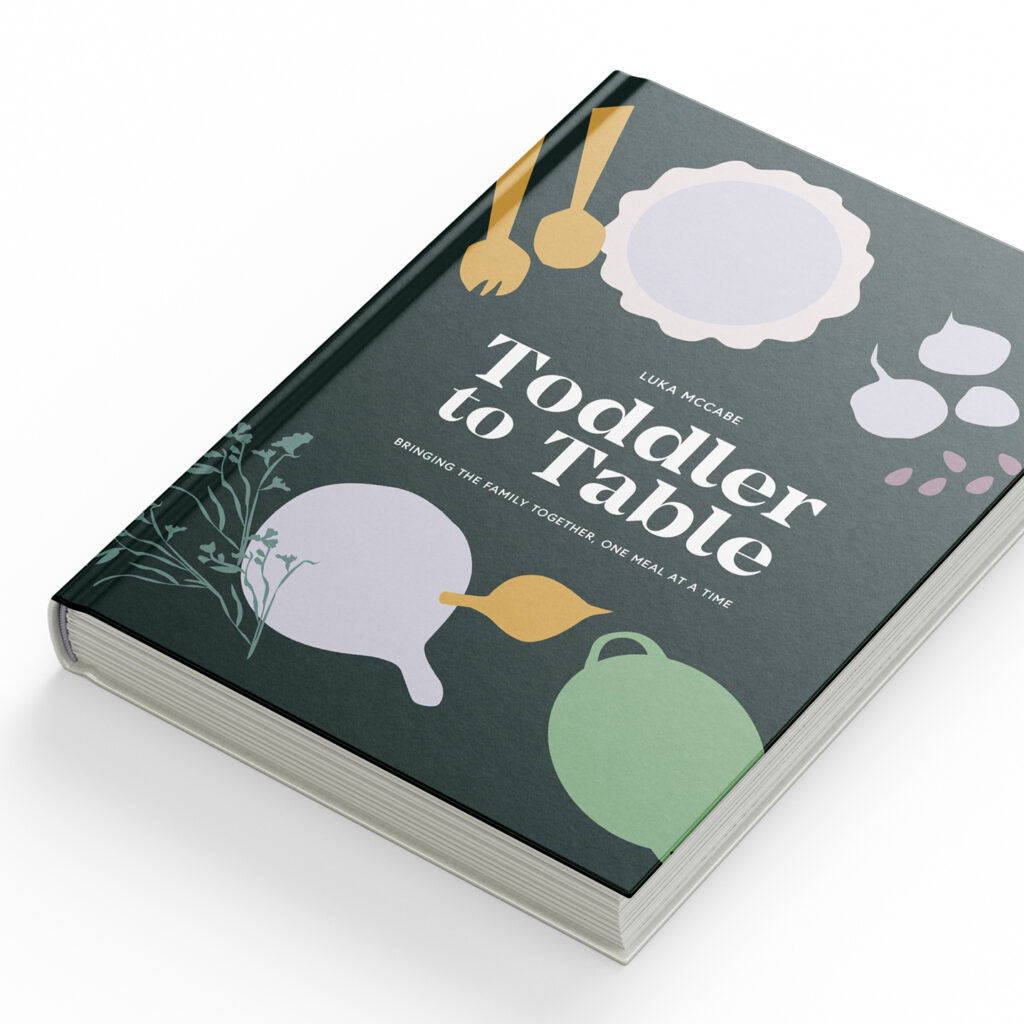
Our book Toddler to Table is your go-to-resource for all things toddler mealtimes. We go through each of these strategies (and more) – plus over 100 family-friendly recipes to share with your toddler.
Here are some links for some helpful podcast episodes on this topic we have done:
References
- Larson, N., MacLehose, R., Fulkerson, J. A., & Berge, J. M. (2013). Family meals during adolescence are associated with higher diet quality and healthful meal patterns during young adulthood. Journal of the American Dietetic Association, 113(12), 1601-1607. doi: 10.1016/j.jand.2013.07.032
- Carruth, B.R., Ziegler, P.J., Gordon, A. and Barr, S.I. (2004). Prevalence of picky eaters among infants and toddlers and their caregivers’ decisions about offering a new food. Journal of the American Dietetic Association, [online] 104, pp.57–64. doi:https://doi.org/10.1016/j.jada.2003.10.024.
- Musick, K., & Meier, A. (2012). Assessing causality and persistence in associations between family dinners and adolescent well-being. Journal of Marriage and Family, 74(3), 476-493. doi: 10.1111/j.1741-3737.2012.00977.x
- Satter, E. (2000). Child of Mine: Feeding with Love and Good Sense. Bull Publishing Company.
- Carruth, B.R., Ziegler, P.J., Gordon, A. and Barr, S.I. (2004). Prevalence of picky eaters among infants and toddlers and their caregivers’ decisions about offering a new food. Journal of the American Dietetic Association, [online] 104, pp.57–64. doi:https://doi.org/10.1016/j.jada.2003.10.024.



Back in stock
Toddler to Table now back in stock!
Your guide to bringing the family together, one meal (and delicious recipe) at a time.
Order now
The Division of Responsibility
A framework that makes feeding feel calmer and clearer

Weaning
How to wean your baby from breastmilk to a balanced diet
Dairy – Cows Milk
How to introduce dairy to babies, and is cows milk necessary in a toddlers diet?
Food Refusal
When a Toddler Refuses a Previously Preferred Food
Bone Broth/Meat Stock
Everything you need to know about bone broth
Tongue Ties
What should you do?


Add a comment
Show Comments
0Leave a Comment
Your email address will not be published. Required fields are marked *