

Choosing a Highchair
What highchair should I choose? Is my baby’s highchair supportive?
Contents
Back in stock
Toddler to Table now back in stock!
Your guide to bringing the family together, one meal (and delicious recipe) at a time.
Order nowWe often receive questions about highchair support. Parents wonder if their baby’s highchair provides enough support, if their toddler looks stable, and if a footrest is necessary.
What do we mean by stability?
When it comes to meal times, stability is essential for successful mobility at the mouth. A supportive highchair supports swallowing safety, fine motor skills, breathing, oral motor coordination, and increases the stability of the jaw, tongue and lips. We often say “stability at the hips equals stability at the lips”. This does have science to back it up. It also makes a lot of sense when we break it down anecdotally. Imagine being served a delicious steak and chips but having to eat it while seated on a bar stool without a footrest. Without foot stability and back support, balancing, cutting and eating the steak would be challenging. It’s the same for our little ones.
There are two factors that contribute to our baby’s and toddler’s stability at mealtimes: postural stability and positional stability. Postural stability refers to the ability to sit up unassisted, while positional stability is externally and positionally generated, such as resting against a mother’s body for breastfeeding or sitting in a highchair for solids. Please see this blog for more information about sitting unassisted. For the purpose of this blog, let’s focus on the positional stability highchairs can provide.
What to look for in a highchair
If you are yet to choose your baby’s highchair, here are a few important criteria to keep in mind:
- Safety – Look for a sturdy, stable chair with a 5-point or 3-point harness to keep your baby securely seated. Ensure the chair has a wide base to prevent tipping.
- 90/90/90 – Look for a highchair that allows your baby to site with a 90-degree angle at the hips, knees, and ankles, with feet flat on a surface. This means an upright chair (not a reclining one!) with a foot rest
- Footrest – It is important that your baby can firmly plant their feet on a stable footrest. Look for one with an adjustable footrest that supports your baby (and eventually toddler) as they grow
- Tray at the level of their elbows – it is important that your baby can reach the tray comfortably. A removable highchair tray is also ideal for cleaning and for bringing baby to the family dinner table.
- Easy to clean – From mum-to-mum, looking for a chair that is easy to clean is a must! While hosing it down in the shower is a good hack, it’s always easiest to be able to pop the tray in the dishwasher.
If you already have a highchair and are wondering if your little one is stable and supported, here are four questions you can ask:
- Can they sit upright in the middle of their highchair with aligned shoulders and hips?
- Can they reach the tray comfortably, with the tray positioned high enough for their elbows to rest if desired?
- Can they sit with their weight evenly distributed without leaning or falling to one side?
- Can they firmly plant their feet on a stable footrest with knees, hips and ankles at a 90/90/90 angle?
Examples
Let’s look at a few examples to practice assessing postural stability:
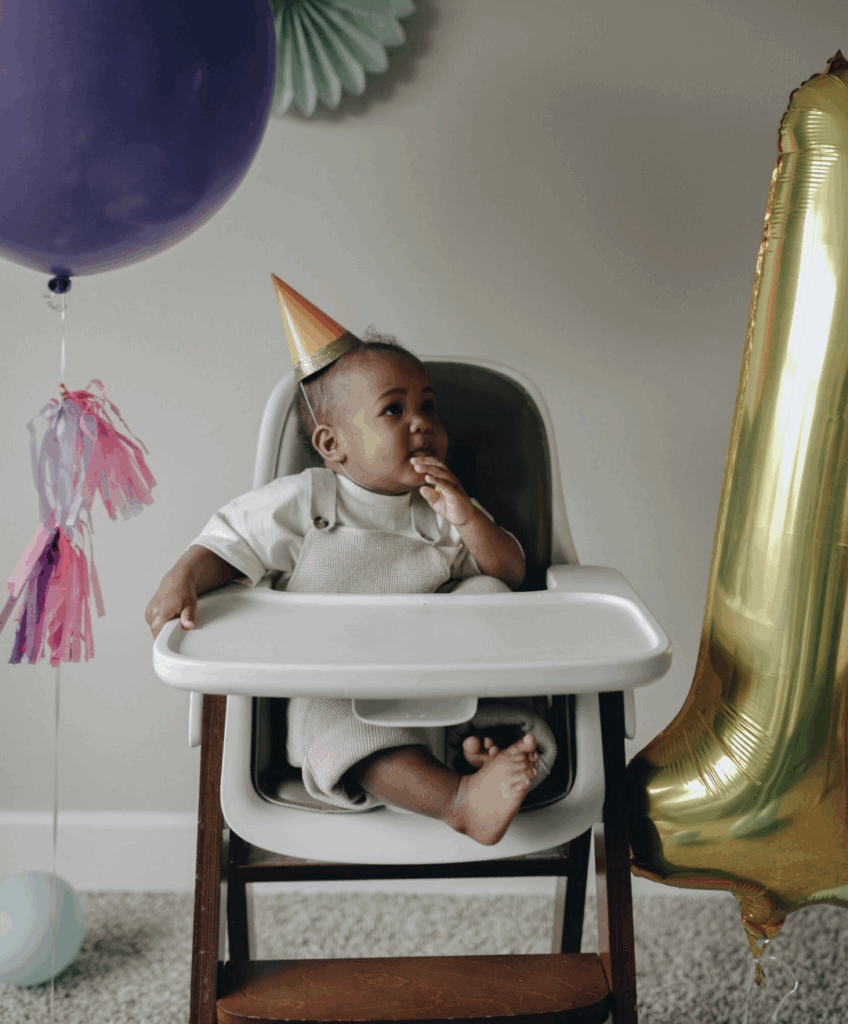
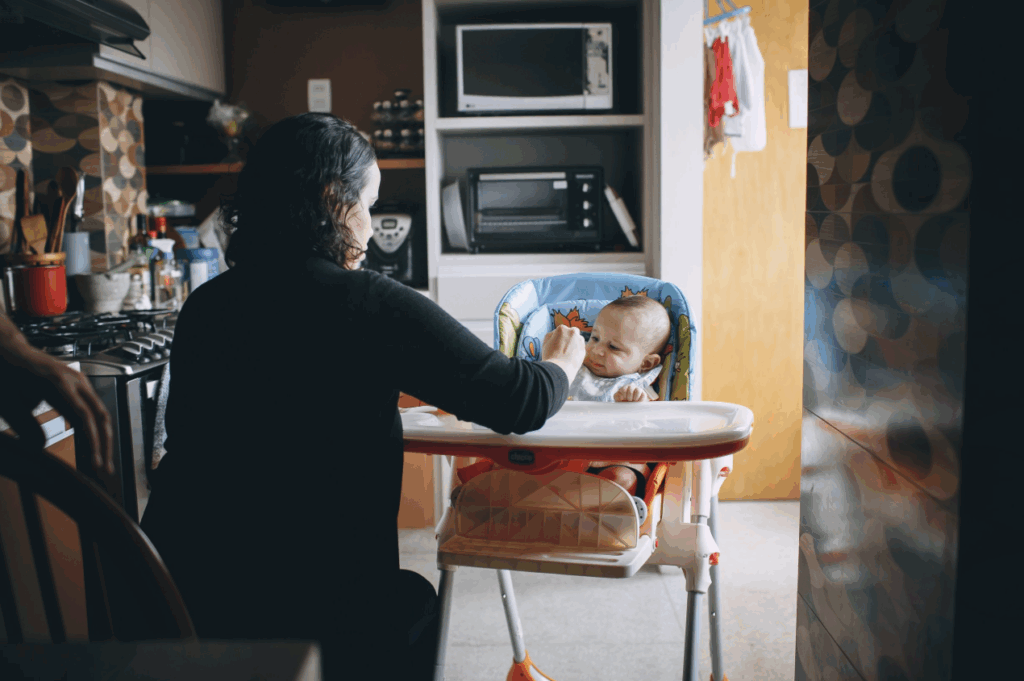
In this image, this little guy does not appear to be stable in the chair. There are a few reasons for this! Firstly, he doesn’t have a footrest to firmly plant his feet. He doesn’t have the support and stability that a 90/90/90 angle in his ankles, knees and hips would provide. As a result, he isn’t distributing his weight evenly through both sides of his body and is leaning to his right side for stability. You can see him holding onto his tray in an attempt to gain stability. Unfortunately, this highchair does not pass the positioning stability test.
Similarly, this highchair does not pass the positioning stability test. The semi-reclined position causes misalignment of the shoulders and hips, which can compromise safety due to the influence of gravity. The food and even the baby’s tongue are more likely to move quickly to the back of the throat, affecting control. Additionally, this little baby does not have appropriate foot support or positioning of the ankles/knees/hips which leads to uneven weight distribution and instability.
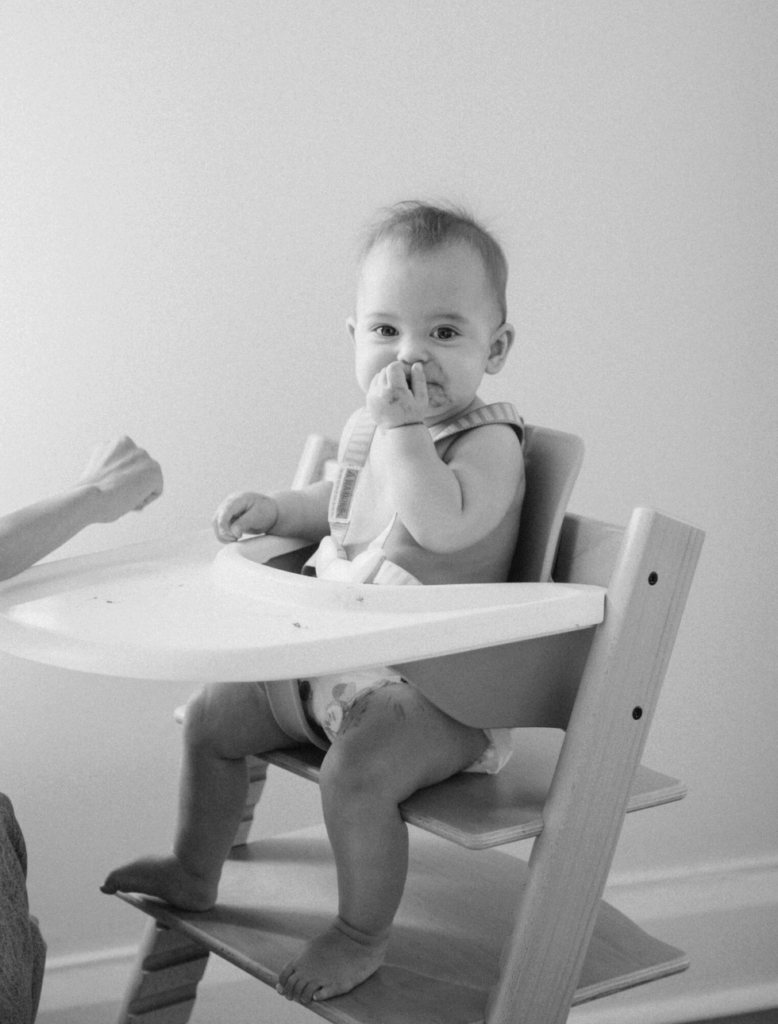
This is Rachael’s daughter Olive at 7 months. This one passes the positioning test. You can see that Olive is upright in the middle of her chair, her shoulders and hips are aligned and her weight is evenly distributed on either side of her body. She can firmly plant her feet on the footrest, achieving close to a 90/90/90 angle in her ankles, knees and hips.
Modifications
The good news is that most chairs can be modified to better support your little one. Even expensive and ergonomically supportive chairs require adjustments and fittings over time.
Here’s a few things to consider when modifying a highchair for your little one:
- To help your little one sit upright, you can place a rolled towel or small blanket behind their back/pelvis. This will help them shift their weight forward. To help your child evenly distribute their weight you can place a rolled towel on either side of their body.
- To help your little one reach their tray, you can adjust the chair settings or boost their height by sitting them on a book or a few folded towels.
- To help your child place their feet firmly on a footrest, you first want to ensure they are sitting upright and are evenly distributing their weight. Once this is achieved, you can focus on the footrest. Some chairs have adjustable foot rest settings, while others may require purchasing a footrest add-on or using alternative items in your environment, but for other chairs you may need to purchase a foot rest or utilise something in your environment such as a dining chair, large box or a few books.
Our Recommendations
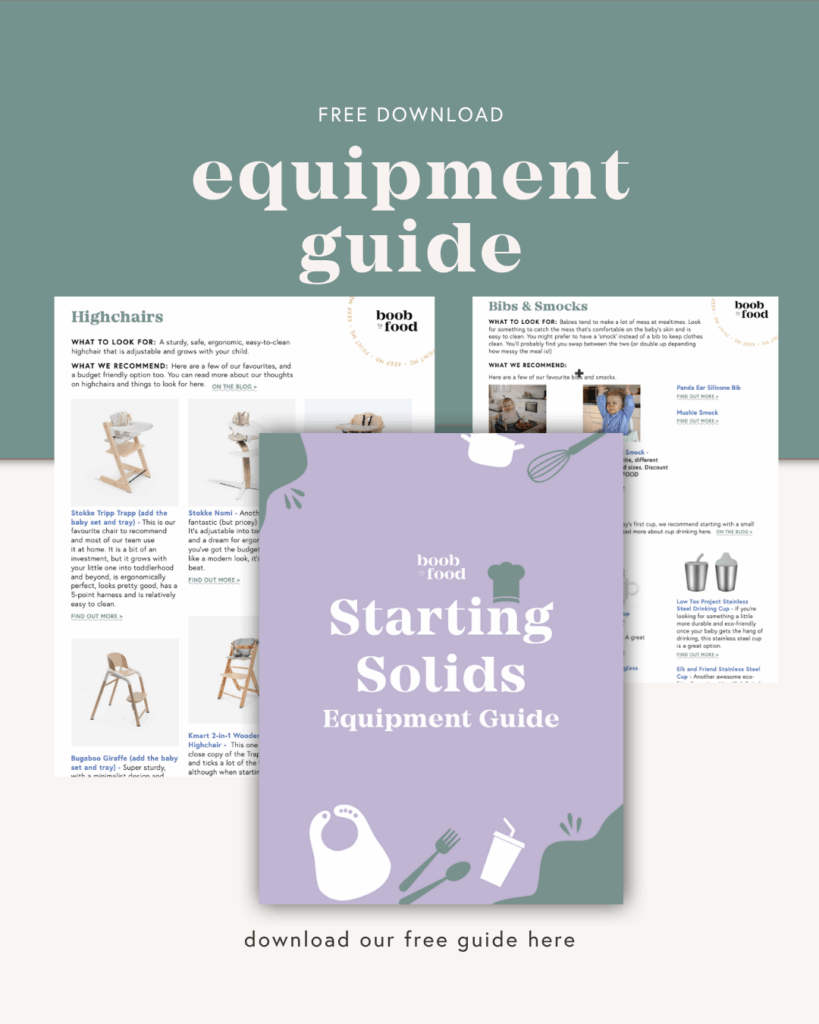
Starting solids is an exciting time for families and babies! By ensuring that your little one’s highchair provides positioning stability, you allow them to concentrate on exploring, eating and enjoying their food. If you’d like to know what equipment we recommend for Starting Solids you can download our FREE Starting Solids Equipment Guide HERE.
Podcast
Want to listen to more on this topic before you make the investment? Listen to our podcast on choosing a highchair here.
Highchair refusal?
Highchair refusal can be really frustrating. Check out our blog with our tips and tricks here.
References
- Chaffin, D. B., Martin, B. J., Andersson, G. B. J. (2006). Occupational Biomechanics. United Kingdom: Wiley.
- Ertekin, C., Keskin, A., Kiylioglu, N., Kirazli, Y., On, A. Y., Tarlaci, S., & Aydoğdu, I. (2001). The effect of head and neck positions on oropharyngeal swallowing: a clinical and electrophysiologic study. Archives of physical medicine and rehabilitation, 82(9), 1255–1260. https://doi.org/10.1053/apmr.2001.25156
- Morris, S. & Klein, M. (2000). Pre-Feeding Skills: A comprehensive resource for mealtime development. Austin, TX: Pro-Ed.
- Watson Genna, C. (2017). Supporting Sucking Skills in Breastfeeding Infants. 3rd Edition. Burlington, MA: Jones & Bartlett Learning.


Back in stock
Toddler to Table now back in stock!
Your guide to bringing the family together, one meal (and delicious recipe) at a time.
Order now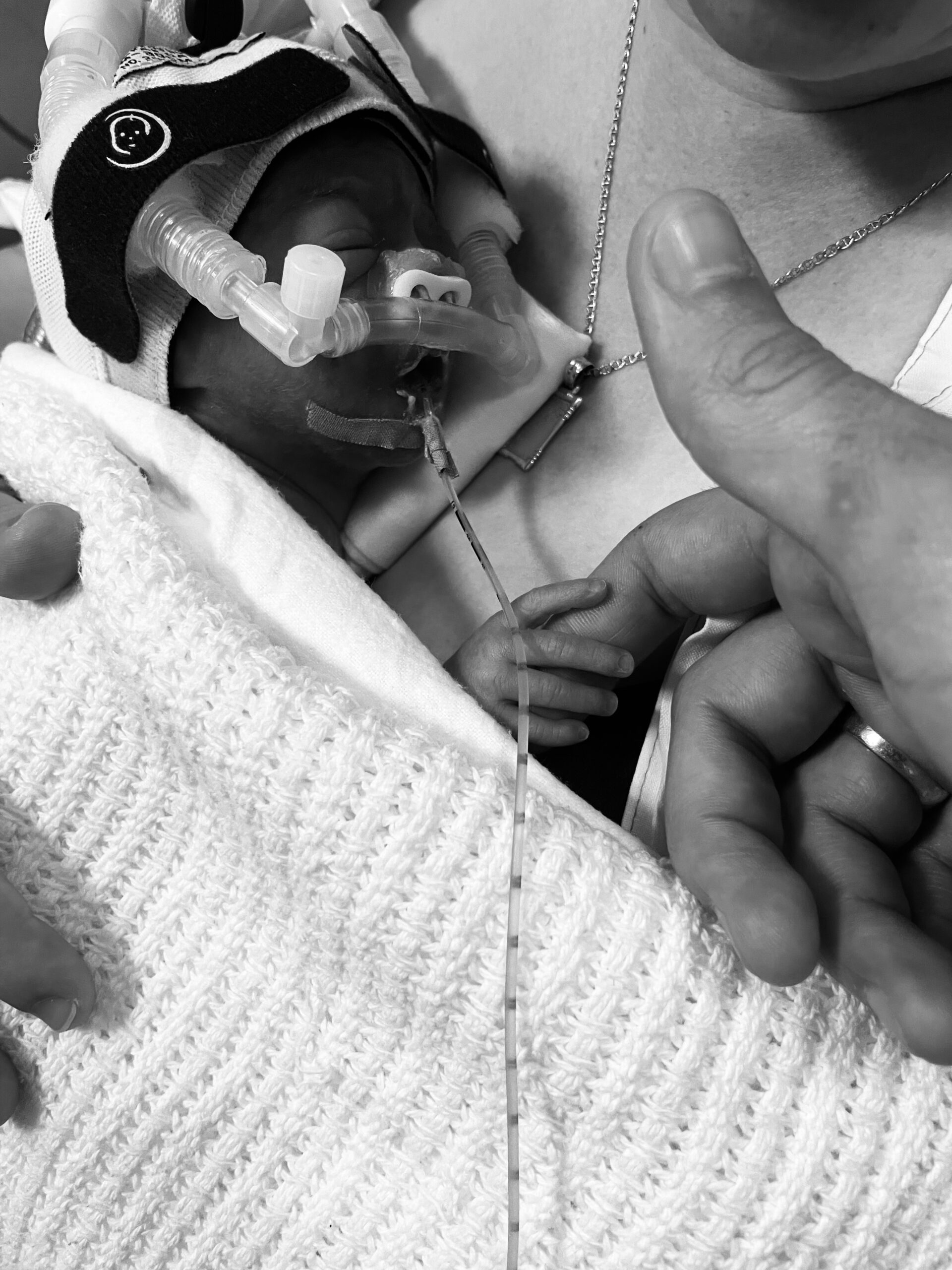
Premature Babies
When to start solids and what to expect.
Baby Food Pouches
Food pouches are so convenient but are they doing more harm than good?

Dairy – Cows Milk
How to introduce dairy to babies, and is cows milk necessary in a toddlers diet?
Bone Broth/Meat Stock
Everything you need to know about bone broth
Tongue Ties
What should you do?

Cups for Babies & Toddlers
What You Need to Know

Add a comment
Show Comments
0Leave a Comment
Your email address will not be published. Required fields are marked *