

Common Q’s
Answering the questions we are commonly asked.
Baby Nutrition
ARE POUCHED FOODS OK?
Every now and then, pouched foods are ok to use with your baby. The convenience makes them very appealing! However, there are a number of downsides to food pouches and the high frequency of use can raise a number of nutritional and developmental concerns.
- Nutritional content: The ingredients and the production process often results in pouches that are lacking in nutrients.
- Sensory opportunities: Eating is a sensory experience. When babies each pouched food they miss the opportunity to see, smell and touch their food.
- Oral motor development: Chewing skills do not automatically develop at specific ages. Safe and coordinated chewing only develops through practice, consistency and exposure to a variety of food textures and shapes. Sucking food from pouches doesn’t provide these practice opportunities.
If you do choose to use pouched foods on occasion, there are a few tweaks you can make to support nutrition and development.
For a more detailed explanation and things to consider when using pouched food, check out our full blog.
- Read the full blog on Pouched Food
I WANT TO RAISE MY CHILD PLANT-BASED – IS THERE ANYTHING I SHOULD KNOW?
A plant-based diet can be a wonderful and sustainable option for children when thoughtfully planned. However, there are a few nutrients that will need extra consideration including protein, iron, zinc, vitamin B12, omega 3 fatty acids and calcium.
- Check out our Plant Based Diet for Kids eBook
- Read our full blog on Plant-Based Diets for Children
- Listen to our podcast on Plant-Based Diets for Children
- Have a 1:1 consult with our experienced team of dietitians, nutritionists, and naturopaths in our online clinic
WHAT’S THE GO WITH FISH AND MERCURY?
Fish can be a great source of nutrients for babies, but what about the mercury risk? Mercury is a toxic metal that builds up in larger, older fish due to a process called bioaccumulation. This can potentially affect your baby’s developing nervous system. However, not all fish are high in mercury, and you don’t need to avoid fish altogether.
The best fish for babies are those low in mercury and high in omega-3 fats, like salmon, sardines, and mackerel. Canned tuna is also a safer option, as it’s generally made from smaller species with lower mercury levels.
For the full list of fish to offer and which ones to avoid, check out our detailed blog.
- Read our full blog on Fish and Mercury
CAN MY BABY HAVE SALT?
It’s a common myth that babies shouldn’t have any salt, but the reality is a bit more nuanced. While it’s important not to overdo it, some salt is safe for babies. Sodium, the component of salt, is actually essential for babies’ development, especially in their first year. The key is to avoid processed foods that are high in sodium and instead focus on fresh, whole foods.
You don’t need to avoid seasoning home-cooked meals with a pinch of salt. A small amount added to food is fine, and can be helpful so that your baby can enjoy the same meals as the rest of the family.
For more details on salt/sodium, its role in baby nutrition, and the latest research, check out our resources
- Read our full blog on Sodium and Salt for Babies
- Listen to our podcast on Sodium and Salt for Babies
CAN MY BABY HAVE DAIRY?
Yes, but with a few important considerations.
Dairy in Food: You can offer foods containing dairy (like yoghurt, cheese, or milk used in cooking) as soon as your baby starts solids, but monitor for any signs of an allergic reaction. Dairy is a common allergen, so start with small amounts and watch closely.
Dairy as a Drink: Avoid offering cow’s milk (or milk alternatives like soy or almond or coconut milk etc) as a drink until after your baby’s first birthday. Before then, breastmilk or formula should remain the primary source of nutrition. They also don’t ‘need’ cows milk drinks at any age!
Allergy or Intolerance: If your baby has a cow’s milk protein allergy or intolerance, dairy products should be avoided until a healthcare professional advises reintroduction.
For more guidance on introducing dairy and allergens, check out our resources:
- Read our blog all about Cow’s milk and Milk alternatives
- Read our blog on Introducing Allergenic Foods
- Learn more in our starting solids book Milk to Meals
- Listen to our podcast about Cow’s milk
SHOULD I START WITH RICE CEREAL?
Rice cereal is still often recommended as a first food, mainly because it’s fortified with iron and considered low allergenic. However, it would not be our recommendation. Why not? It’s a highly processed food, is actually not high in iron (and is non-haem iron which is less readily absorbed), low in other key nutrients, and can contribute to constipation due to the synthetic form of iron added. Plus, recent concerns about arsenic in rice cereal have made many parents question its safety.
Instead, we recommend offering nutrient-dense options like meat and iron-rich plant foods as your baby’s first foods. These will provide more bioavailable iron and other essential nutrients, like zinc, which are vital for your baby’s development.
For more information, check out our full blog on why rice cereal may not be the best option, and listen to our podcast episode for more tips on starting solids. Plus, for a comprehensive guide to starting solids, take a look at our book Milk to Meals.
- Read the full blog on Why We Don’t Recommend Rice Cereal
- Listen to our Starting Solids podcast episode
- Get the Milk to Meals book
HOW DO I INCORPORATE IRON?
Iron is essential for your baby’s growth, especially between 6-24 months when their iron needs are at their highest. Around 6 months, breast milk no longer provides enough iron, so it’s important to introduce iron-rich foods.
Animal-based sources like chicken liver, beef, and sardines offer the most easily absorbed form of iron (haem iron). For plant-based diets, foods like lentils, spinach, and prunes are great options, though non-haem iron is less easily absorbed.
For more on the best iron-rich foods and tips on optimising absorption, check out our resources:
- Read our full blog on Incorporating Iron into Baby’s Diet
- Read our blog on Why We Don’t Recommend Rice Cereal
- Listen to our podcast on Iron for Babies
- Download our Plant-Based Baby Food Ebook
- Get our book Milk to Meals for all the info you need to start solids and delicious recipes to guide you
Clinic
Is there a way to stay updated on clinic news, resources, or events?
How do I contact the clinic if I have questions?
Do you treat the whole family in one appointment?
Do you support parents with twins or multiples?
Do you see families with specific dietary needs (e.g., vegan, allergies, intolerances)?
What is your cancellation policy?
- 2 days notice = 25% fee
- 1 day notice = 50% fee
- day of appointment = full fee
What happens if I miss my appointment?
Do I need a referral from my GP?
How do I prepare for my appointment?
How do I book an appointment?
Can I purchase a consultation as a gift for a friend?
Do I need to prepay for my appointment?
Do you offer payment plans?
Do you provide receipts for claiming?
Do you work with NDIS participants?
Do you accept private health insurance?
Are consultations covered by Medicare?
How often do I need a follow-up appointment?
Do you provide recipes and feeding guides as part of the consultation?
Do you prescribe medications or supplements?
What happens in a consultation?
What age groups of babies and children do you support?
Do you support families outside Australia and New Zealand? Why not?
Do you offer both in-person and virtual consultations?
Which practitioner should I book in with for my concerns?
How do I know whether to book an Initial Consultation or a short appointment (e.g., Express Immune Consult / Supplement Review)?
When should I book a Discovery Call vs an Initial appointment?
- Discovery Call (free 15 mins): this complimentary phone call allows you the time to clarify any questions you may have prior to booking in for an appointment. You will speak to a practitioner who will assess which practitioner and booking type would be best suited. Please note that there is no clinical advice provided.
- Initial Consultation ([45–60] mins): this appointment is for first-time individuals/ families with any new/complex health concern. Includes full health history, assessment, and a treatment plan.
What services does the Boob to Food Clinic offer?
Concerns
MY CHILD IS IRON DEFICIENT – HELP!
Iron deficiency can impact your child’s energy, growth, and development, but can also be supported:
- Offer Iron-Rich Foods
- Pair non-haem iron with Vitamin C to improve absorption
- Avoid Iron Inhibitors
- Consider Supplements
For personalised advice and strategies, explore our resources:
- Read our blog on Iron for Babies
- Listen to our podcast on iron
- Book a consultation with one of our experienced naturopaths at the Boob to Food Clinic
MY CHILD HAS A SUSPECTED ALLERGY – NOW WHAT?
The recommendation is that you avoid that allergen and speak to your local general practitioner in the interim for ongoing advice while waiting to see a specialist, if needed. The family should then continue to introduce other allergens in a safe, incremental manner to their child.
MY CHILD HAS GASTRO—HELP!
Gastro can be tough on little ones, but there are ways to help them recover and stay nourished. The most important thing is to focus on keeping your child hydrated to replace lost fluids and support their recovery.
For expert guidance and support, explore these resources:
- Read our blog on how to nourish your child with gastro for practical tips and advice.
- Book a consultation at the Boob to Food Clinic for personalised support tailored to your child’s needs.
- Listen to our podcast for in-depth insights and tips on managing gastro.
MY CHILD HAS ECZEMA – HELP!
Eczema is a common condition in children, but effective management is possible. For comprehensive guidance and support, explore these resources:
- Understanding Eczema in Children: Gain insights into eczema’s causes and management strategies in our detailed blog post.
- Eczema Masterclass: Delve deeper with our self-paced masterclass, offering practical steps and holistic recommendations to address eczema.
- Boob to Food Clinic: For personalised consultations, our experienced nutritionists and naturopaths are available to support your child’s unique needs.
- Podcast Episodes: Listen to in-depth discussions on eczema management in episodes 44 and 94 of our podcast.
MY CHILD IS CONSTIPATED – HELP!
Constipation in babies is common but should never be considered ‘normal.’
For detailed guidance and personalised support, explore these resources:
- Read our blog on Constipation for practical tips and strategies.
- Join our Constipation Masterclass for in-depth solutions and expert advice.
- Book a consultation at the Boob to Food Clinic to get tailored guidance for your child.
- Listen to our podcast episode on constipation for insights and actionable tips.
I NEED HELP WITH BONE BROTH!
You’ve come to the right place! We have written an extensive blog post on bone broth which you can read here.
Read our full blog on Bone Broth here
MY BABY EATS NOTHING – WHEN IS THIS ABNORMAL?
When first starting solids, some babies hit the ground running, while others take a little while to get the hang of things. Within the first 2-3 months of starting solids it is normal for babies to eat a very small amount (and to have some days where they consume nothing!).
However, here are a few general guidelines for when to seek help from a medical professional:
- If your baby has been introduced to solid food (purees or finger foods) for 2 months and is still not consuming anything at all
- If your baby is between 9-12 months and has been introduced to finger foods for a few weeks and is still not consuming any finger foods
- If you have concerns about weight gain or nutrient intake
If you are unsure about your baby’s food intake check to see that the food prepared matches their developmental stage.
- Read our full blog on Safe Shape and Size of Foods here
- Read our full blog on Starting Solids
Pregnancy & Postpartum
WHAT AFTERCARE SHOULD I HAVE POSTPARTUM?
Postpartum recovery isn’t just about navigating sleepless nights—it’s a crucial time to care for your health. Many women experience symptoms like fatigue, low mood, anxiety, hair loss, weight changes, and more. While these are often dismissed as “just life with a baby,” they can indicate underlying health concerns that deserve attention.
Key Areas of Support:
- Health Checks: We recommend thorough testing, including iron studies, thyroid panels, and vitamin levels, to uncover and address potential imbalances.
- Dietary Support: Focus on nutrient-dense meals to nourish your body and maintain energy. Think hearty soups, casseroles, and snacks you can eat one-handed!
- Rest and Recovery: Embrace rest, delegate tasks, and take moments to relax—even if sleep is hard to come by.
- Pelvic Floor Care: A women’s health physiotherapist can guide your recovery and strengthen your pelvic floor.
- Emotional Support: Surround yourself with a supportive village, and don’t hesitate to seek professional help if needed.
We Can Help:
Our online clinic offers tailored guidance, including dietary advice, supplement recommendations, and strategies to balance hormones and improve energy.
- For tailored advice, book a consultation in our online clinic
- Read our full blog post here
CAN WE INFLUENCE NUTRIENTS IN BREASTMILK?
Yes, certain nutrients in breastmilk, like B vitamins, choline, vitamin A, vitamin D, omega-3 fatty acids, selenium, and iodine, are influenced by your diet, while others, such as calcium and iron, remain consistent. Eating a balanced diet with nutrient-dense whole foods is essential for sustaining breastfeeding and maintaining your energy.
- For tailored advice, book a consultation in our online clinic
- Read our full blog post here
CAN I HAVE LIVER WHEN PREGNANT?
Yes, liver can be a nutrient-rich addition to your pregnancy diet when consumed in moderation. As a guide, 50–75g of liver per week provides a great boost of nutrients without exceeding the upper limit of vitamin A. If you’re taking a prenatal supplement containing vitamin A, consult with a professional to avoid overconsumption.
- For tailored advice, book a consultation in our online clinic
- Read our full blog post here
WHAT FOODS SHOULD I AVOID EATING WHEN PREGNANT?
Did you know that there are many foods that you can safely eat during pregnancy that you may be thinking you can’t? Our book Nurture the Seed has a whole chapter on food safety, or you can listen to our podcast episode with our dietician Renee Jennings on food safety in pregnancy.
- Book an appointment with our prenatal dietitian Niki in our online clinic
- Listen to episode 15 of Boob to Food the podcast – food safety in pregnancy HERE
- Purchase your copy of Nurture the Seed
HOW SHOULD I PREP FOR PREGNANCY?
Preparing for pregnancy should ideally commence a minimum of 3-4 months prior to trying to conceive or earlier. The prep work will look different from person to person, so we recommend speaking with one of the highly experienced practitioners in our online clinic to get a plan that is right for you and your partner (yes! You both should be doing some prep – it takes two to make a baby after all).
- For tailored advice, book a consultation in our online clinic
- Read our blog on pregnancy preparation
HOW TO DEAL WITH MORNING SICKNESS
Morning sickness can be challenging, but there are ways to manage it. For practical tips and support, explore our blog:
SHOULD I TAKE ANY OTHER SUPPLEMENTS WHEN PREGNANT?
This will come down to your individual requirements including things like your health history, nutritional status, diet, current conditions, gestation etc.
For tailored advice, book a consultation in our online clinic
HOW DO I CHOOSE A PRENATAL MULTIVITAMIN?
Choosing the right prenatal multivitamin depends on your unique needs, as not all options are created equal. Look for a supplement that complements your diet, provides key nutrients like folate, iron, iodine, vitamin D, and DHA, and avoids poorly absorbed synthetic forms that may cause side effects.
- For tailored advice, book a consultation in our online clinic
- Read our full blog on prenatal multivitamins here
Starting Solids
CAN BABIES HAVE FLAVOUR?
Yes! Babies are not only capable of experiencing flavour, but they are also born with natural taste preferences and a remarkable ability to learn new ones. In fact, introducing a variety of flavours early is key to helping your baby develop a positive relationship with food.
From birth, babies have a natural preference for sweetness, which may guide them toward foods like breastmilk. However, other flavours, such as bitter or salty, are learned through repeated exposure. By exposing them to diverse tastes—sweet, savoury, sour, and even mildly bitter—you’re helping them build familiarity and acceptance.
How can you introduce flavours?
- Offer naturally flavourful whole foods like roasted pumpkin, lentils, sauerkraut or sardines.
- Use mild herbs and spices like cinnamon, cumin, or parsley to make meals interesting without added salt or sugar.
- Remember: It’s all about repeated exposure. Even if they don’t love a flavour the first time, keep offering it—it’s the number of exposures that matters most.
For more guidance and recipes that encourage flavour exploration:
- Learn more in Milk to Meals
- Listen to our Starting Solids podcast episode
- Explore free recipes on our website
HOW DO I KNOW IF MY BABY IS ALLERGIC TO A FOOD?
When introducing new foods, it’s important to watch for any signs of an allergic reaction. Common symptoms of food allergies can include rash, swelling, vomiting, diarrhea, or difficulty breathing.
To help identify potential allergens, we recommend introducing one new allergen at a time and
For more in-depth advice on allergens check out our blog, podcast, and our book Milk to Meals for detailed, step-by-step guidance.
- Read our full blog on Introducing Allergenic Foods
- Listen to our podcast on Introducing Allergens
- Get your copy of Milk to Meals
- Download our FREE allergen tracker
WHAT ARE THE TOP ALLERGENS?
The top 9 high-risk foods that contribute to 90% of food allergies in Australia are:
- Dairy/Cow’s milk
- Eggs
- Soy
- Wheat
- Peanuts
- Tree nuts
- Sesame
- Fish
- Shellfish
We have more resources to support you through the allergen introduction with your baby:
- Download our FREE allergen tracker
- Read our full blog on Introducing Allergenic Foods
- Listen to our podcast on Introducing Allergens
- Get your copy of Milk to Meals
HOW DO I INTRODUCE THE ALLERGENS?
Introducing allergens to your baby can feel daunting, but it doesn’t have to be! By taking a gradual approach and observing closely, you can help minimise risks.
For more in-depth advice on how to introduce allergens check out our blog, podcast, and our book Milk to Meals for detailed, step-by-step guidance.
- Read our full blog on Introducing Allergenic Foods
- Listen to our podcast on Introducing Allergens
- Get your copy of Milk to Meals
- Download our FREE allergen tracker
WHAT CUP SHOULD I USE?
From six months of age you can start offering small sips of breastmilk, filtered water or cooled boiling water in an open cup. Open cup drinking supports oral motor skill development, so it makes sense to introduce it from the start. A straw cup can be introduced to your little one around 8 months of age or after they have mastered an open cup, whichever one comes first.
For more detailed information on the best way to introduce a cup to your baby, we’ve got you covered:
- Read Our Blog on Cup Drinking
- Listen to Our Podcast All About Cups
If you would like to read about when to introduce water and how much is needed, check out our full blog here:
- Read our blog on when to offer water
WHEN DO I OFFER WATER?
Introducing water to your baby is a common question for parents starting solids. Here’s what you need to know:
- Under 6 months: Babies should only have breastmilk or formula as their primary source of fluids. Introducing water too early can interfere with milk intake and potentially dilute important electrolytes. If the weather is hot or your baby is unwell, continue with milk feeds and offer extra fluids through breastfeeding or formula.
- From 6 months: You can begin offering small sips of water, but their main source of hydration should still come from breastmilk or formula. This helps babies develop the skills for drinking and encourages healthy habits. Breastmilk is over 80% water, so it’s still their primary fluid source.
- How much water? For babies 7-9 months, around 100-150mL of water can be offered in addition to breastmilk/formula. From 10-12 months, this increases to 150-200mL of water.
For more detailed information on when to introduce water and how much is needed, check out our blogs:
- Read our blog on when to offer water
- Read Our Blog on Cup Drinking
WHAT SHOULD I LOOK FOR IN A HIGHCHAIR?
When choosing a highchair, safety and comfort are essential. Here are a few things to keep in mind:
- Safety first: Look for a sturdy chair with a secure harness and a wide base to prevent tipping.
- 90/90/90 angle: Ensure your baby’s knees, hips, and feet form a 90-degree angle when sitting, which helps promote good posture and digestion.
- Footrest: A footrest is important for supporting your baby’s feet and providing stability as they sit at the table.
- Adjustability: Choose a highchair that grows with your baby, with adjustable height, footrest, and tray options to accommodate their development.
- Ease of cleaning: Look for a highchair with removable, wipeable trays to make mealtimes easier to clean up.
For more tips on selecting the right highchair, check out our resources:
- Blog: Choosing a Highchair
- Podcast: All About Highchairs
And for a complete list of essential equipment to start solids, download our Free Equipment Guide
WHAT EQUIPMENT DO I NEED TO START ON SOLIDS?
Starting solids is exciting, and having the right equipment can make the process smoother. Here’s a basic list of what you’ll need to get started:
- High Chair – A safe, sturdy high chair with good back support and a secure harness is essential. Make sure it allows your baby to sit upright and comfortably during meals.
- Plates & Bowls – Choose lightweight, eco-friendly, easy-to-clean, BPA-free plates/bowls.
- Spoons – Soft-tipped spoons are perfect for spoon-feeding early on.
- Bib – A waterproof, reusable bib with a pocket will help catch food and reduce messes.
- Smock – Game changer for keeping clean!
- Cups – open and straw
- Food Storage – Small airtight containers (preferably glass or silicone) are helpful for storing purees or leftover food.
For more details and recommendations on the best equipment to get started, download our Free Equipment Guide here:
- Download Your Free Equipment Guide
Need help choosing the right high chair? Check out our resources for tips on selecting the best one for your baby:
- Read Our Blog on Choosing a High Chair
- Listen to Our Podcast All About High Chairs
Confused about cups? We have a blog on this too!
- Read Our Blog on Cup Drinking
MY BABY TAKES BIG BITES OF FOOD, WHAT SHOULD I DO?
If your baby is taking big bites of food, it’s important to stay calm and give them time to process it. Babies are learning how to chew and manage food in their mouths, and sometimes they’ll take larger bites than they can handle.
Should I be worried?
Generally, no. Research tells us that if a baby is able to break their food into small pieces, it is very different and much safer than a caregiver placing small pieces of food in a baby’s mouth. When babies self-feed they look at and touch their food and the brain receives sensory and motor messages which prepare the mouth to either safely swallow, gag or spit the food out.
If you’re concerned about choking or want to learn more about safe food sizes and textures, check out our blogs
- Gagging vs Choking: Understanding the Difference
- Safe Shape and Size of Foods
GAGGING VS CHOKING – WHAT’S THE DIFFERENCE?
Gagging is a natural protective reflex that helps prevent choking. When your baby gags, the back of their throat contracts to move food forward, which is normal and usually harmless. It’s a sign that your baby is learning to manage food textures.
Choking, however, is a serious situation where the airway is blocked, preventing your baby from breathing. Signs of choking include difficulty breathing, inability to cry, and changes in skin colour (like turning blue or pale). If you suspect choking, immediately perform infant choking first aid and call emergency services.To learn more about how to handle choking and how to minimise risks, check out our resources:
- Blog: Gagging vs Choking: Understanding the Difference
- Blog: Safe Shape and Size of Foods
- Podcast: Choking safety and first aid
MY BABY HAS TEETH, IS IT OK TO GIVE THEM FINGER FOODS?
Yes! Teeth or no teeth, once they are developmentally ready to start solids, you can introduce finger foods.
For more info on safe finger foods for babies, check out our blog:
- Read the full blog on Safe Shape and Size of Foods
WHAT SIZE, SHAPE AND TEXTURE SHOULD FOOD BE?
When starting solids, it’s important to choose the right size, shape, and texture of food to help reduce choking risks and encourage safe eating. While babies have natural reflexes to protect themselves, you can still take steps to make mealtime safer and support their development.For more details on how to safely prepare food for your baby, check out our full blogs:
- Blog: Safe Shape and Size of Foods
- Blog: Gagging vs Choking: Understanding the Difference
BABY LED WEANING OR SPOON FEEDING… WHAT’S BEST?
Both Baby-Led Weaning (BLW) and spoon-feeding can work well for introducing solids, and there’s no one-size-fits-all approach. Spoon-feeding gives you more control over portion sizes, while BLW encourages your baby to explore food on their own, promoting independence.
We do however recommend offering at least some finger foods by around 9 months, even if you start with purees, to help develop fine motor skills and chewing. You can easily combine both methods to suit your baby’s development and preferences.
For more guidance, check out our resources on BLW vs. Spoon-Feeding.
- Read the Blog on BLW vs. Spoon-Feeding
- Listen to our podcast on BLW vs. Spoon-Feeding
WHAT IS THE BEST FOOD TO START ON?
There’s no single “best” first food, but there are best first “foods”! When you are first starting solids we like to focus on foods that are easy to digest, not a top allergen, and rich in essential nutrients like iron. Some excellent choices include sweet potato, avocado, broccoli and meats like liver or lamb.
Once your baby has been introduced to ‘low allergenic’ foods and tolerating them well, you can then start introducing some of the top allergens such as peanuts and eggs.
For more ideas and guidance, check out our FREE First Food Guide from our book Milk to Meals, which is a downloadable guide that includes our favourite first foods.
- Download Your FREE First Food Guide
- Grab your copy of Milk to Meals
CAN I COMBINE DIFFERENT FOODS?
Yes, you can absolutely combine different foods when starting solids! Many parents start by offering simple combinations like mashed sweet potato with avocado or pureed vegetables and bone broth.
However, when introducing new foods, it’s important to introduce the top allergens (like egg, peanuts, or dairy) one at a time. This allows you to monitor for any potential reactions.
For more guidance on how and when to introduce top allergens, check out our allergen blog:
- Read our blog on Introducing Allergenic Foods
- Download Your FREE First Food Guide
HOW DO I KNOW IF MY BABY IS FULL?
It’s not always easy to tell, but there are a few signs that your baby is full. They may turn their head away from the spoon or food, clamp their mouth shut, or start playing with the food instead of eating it. Babies also may become distracted or lose interest in the food. Trust your baby’s cues, and remember that they know when they’ve had enough.
For more tips on recognizing hunger and fullness cues, check out our blog:
- Read the full blog on Hunger Cues and Portion Control
CAN I START SOLIDS IF MY BABY HAS GASSY OR COLICKY TUMMY ISSUES?
It’s best to wait until your baby is showing signs of readiness for solids before introducing them, especially if they have a sensitive tummy. Starting solids too early could potentially aggravate any digestive discomfort. If your baby has colic or digestive issues, introducing solids around 6 months when their digestive system is more developed can help. Start with simple, easy-to-digest foods like pureed carrots or sweet potato, and keep an eye on how they react.
For more tips on starting solids with a sensitive tummy, check out our blog:
- Read the full blog on Signs of Readiness for Solids
- Read the full blog on Tummy Troubles and Starting Solids
- For personalised support we can help in a 1:1 consultation in our online clinic
HOW MUCH FOOD SHOULD I OFFER?
When you first start solids, offer small amounts—about 1-2 teaspoons—at the beginning of each meal. As your baby becomes more confident with eating, you can gradually increase the portion size. By 6-8 months, your baby may eat around 3-4 spoonfuls per meal, and by 9-12 months, 1/4 to 1/2 cup per meal.
At around 6-8 months, you can also start offering finger foods—1-2 pieces at a time. This could include soft, cooked vegetables, small pieces of avocado, or strips of meat. The key is to introduce these foods in safe, manageable sizes so your baby can practice self-feeding.
Read our full blog on Safe Shape and Size of Foods
Read our full blog on Starting Solids
Grab your copy of our starting solids book, Milk to Meals
HOW MANY MEALS AND HOW OFTEN DO I OFFER FOOD?
When you first start solids, begin with one meal per day, generally around mid-morning after the first nap (or whenever suits you!), to observe how your baby reacts. As your baby gets the hang of eating and shows interest in food, you can gradually increase to two meals a day by 7-8 months, and eventually three meals a day by 9-12 months.
It’s important to remember that breast milk or formula should still be your baby’s main source of nutrition until they are at least 12 months old.
For more detailed guidance on how to structure your baby’s meals, check out our blog:
Read the full blog on Starting Solids
Grab your copy of our starting solids book, Milk to Meals
This will help you navigate mealtimes with confidence!
MY BABY WAS PREMATURE, WHEN DO I START SOLIDS?
If your baby was born prematurely, it’s important to consider their corrected age (the age they would be if born on time) when deciding to start solids. Most premature babies are ready for solids around 6 months corrected age, not their chronological age (actual birth age). Look for signs of developmental readiness, such as sitting up with support, showing interest in food, and having good head and neck strength. it can be helpful to seek additional support from your medical provider.
For more details on signs of readiness and how to adjust the timing for a premature baby, check out our blog:
Read the full blog on Signs of Readiness for Solids
This will help guide you through starting solids at the right time for your baby!
MY BABY IS 4 MONTHS OLD AND INTERESTED IN SOLIDS – SHOULD I START?
At 4 months, your baby may show interest in food, but most governing bodies including the World Health Organization, recommend starting solids around 6 months, or more importantly when your baby meets the signs of developmental readiness. This allows your baby’s digestive system and motor skills to develop fully. Even if they’re curious about solids, it’s essential to wait until they show all the developmental signs of readiness, such as sitting up with support and good head control.
For more details on the signs that your baby is ready for solids, check out our blog:
Read the full blog on Signs of Readiness for Solids
Grab your copy of our starting solids book, Milk to Meals
This will help you feel confident about the right time to start solids!
WHEN SHOULD I START SOLIDS?
The best time to start solids is when your baby shows clear signs of readiness, typically around 6 months of age. These signs include being able to sit up with support, having good head and neck control, ability to reach for food and showing interest in food.
If you’re unsure whether your baby is ready, check out our detailed blog on the signs of readiness for solids to guide you in making the right decision for your baby.
Read the full blog on Signs of Readiness for Solids
Grab your copy of our starting solids book, Milk to Meals
Starting solids is a big step, and ensuring your baby is developmentally ready is key to a successful introduction to food.
Toddlers
ANY TIPS TO MAKE MEALTIMES FUN?
Making mealtimes fun can set your baby up for success. Positive associations with food, family meals and the highchair can have long term benefits. Here’s a few ideas to keep mealtimes fun:
- Eat together: It might sounds simple, but seeing you enjoy food will help your baby enjoy their food too
- Embrace the mess: Let your baby explore different textures and colours, even if this means most of the meal ends up on the floor (or in their hair).
- Use music and sound: Singing familiar songs or nursery rhymes to your baby during mealtimes can help with positive associations. Songs like “round and round the garden”, “this little piggy..” and “if you’re happy and you know it” are a few ideas. You can also make exaggerated sound effects when chewing and exploring food
- Play games: The highchair is a great spot for a game of peekaboo
- Keep the pressure low: Avoid placing pressure on your baby to eat or try certain foods. The benefits of a relaxed and calm mealtime environment cannot be overstated.
Check out our conversation cards, Spoon Fork and Talk, designed to increase connection, play and fun at your family dinner table.
MY TODDLER IS REJECTING FOODS THEY USED TO LOVE – NOW WHAT?
It’s common for toddlers to go through phases of food refusal. The Division of Responsibility can be a helpful framework: parents decide what, when, and where meals happen, and toddlers decide if and how much they eat.
Here are some quick tips:
- Space meals and snacks 2–3 hours apart so your child comes to the table hungry.
- Make mealtimes distraction-free, pressure-free, and focused on connection.
- Pair new or less preferred foods with familiar favourites.
- Avoid making separate “back-up” meals; serve the same meal for everyone.
- Keep exposing less preferred foods by offering small amounts regularly.
- Prioritise family meal times and eating together
- Build variety into the way your child’s preferred foods are offered.
Sound daunting? We have lots of resources to help guide this stage!
For more details and support:
- Read our blog on Picky Eating vs Problem Feeding
- Read our blog on Tips for Fussy Eaters
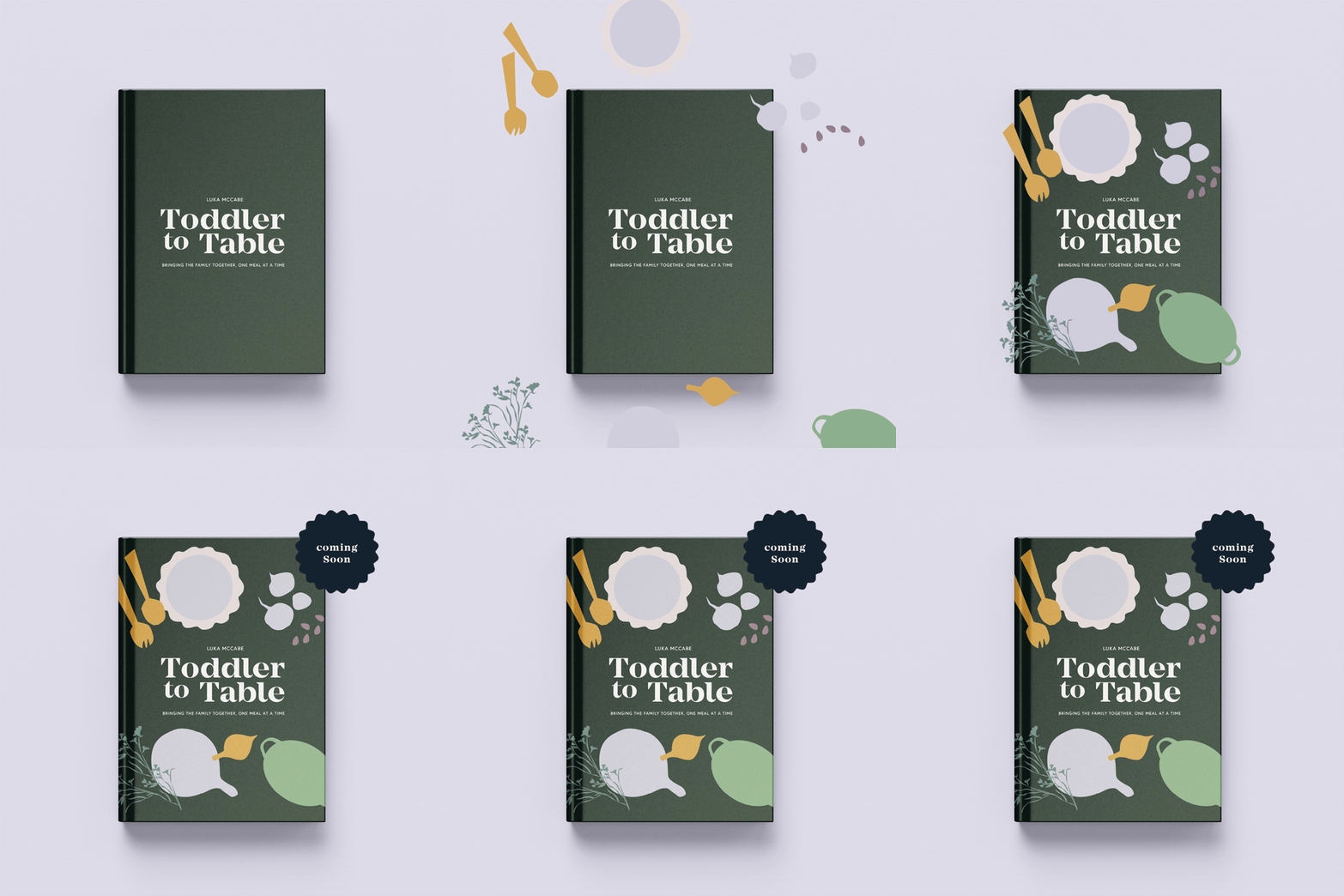
- Check out our book, Toddler to Table for recipes and strategies.
- Listen to our podcast on Picky Eating vs Problem Feeding
IS IT OK TO USE A DIVIDER PLATE?
Yes! Divider plates help to organise food on a plate, which can be especially helpful for children who are sensitive to the way food looks, prefer less “mixed foods” or need a clear visual of their meal options.
However, here are a few things to keep in mind:
- Encourage Variety: Use the sections to offer a range of foods, including familiar favourites and new textures or flavours.
- Promote Exploration: While a divider plate keeps foods separate, we would encourage you to still place different foods in each section so that your child can get used to foods touching. Eg. add strawberries and yoghurt in one section.
Divider plates can support positive mealtime experiences but we also encourage you to also use, or work towards using, non-dividing plates and bowls to reduce dependence. For more tips on mealtime tools and strategies, check out our resources:
- Learn more in Toddler to Table
- Listen to our podcast on mealtime strategies
HOW DO I KEEP MY CHILD IN THEIR HIGHCHAIR
Phases of highchair refusal are common for babies and toddlers. Here are a few strategies to help:
- Set Realistic Expectations: Children can usually sit for about 2 minutes per year of age. A two-year-old might only manage 4 minutes.
- Make Mealtimes Fun: Use engaging plates and creative food presentations.
- Avoid Pressure: Let your child decide if and how much to eat while you decide what’s on the plate.
- Limit Distractions: Create a calm mealtime environment by turning off screens.
- Ensure Comfort: Check the highchair is supportive with a secure footrest.
- Create Positive Associations: Let them play or read in the highchair outside of meals to build familiarity.
- Meet Movement Needs: Encourage movement before meals and allow breaks during mealtime if needed.
For more tips, explore our blogs:
- Read our blog on Highchair Refusal
- Read our blog on Choosing a Highchair
- Listen to the podcast on Highchair Refusal
HOW DO I STOP THE FOOD THROWING?
Food throwing is a way for toddlers to communicate. Here are some strategies to manage it:
- Be Proactive: Start meals by reminding your child, “Food stays on the table.”
- Stay Calm: Respond calmly and gently remind them, “Food stays on the table.” Avoid turning it into a game by constantly replacing food.
- Model Communication: Encourage your child to express when they’re done or offer alternatives like a “no-thank-you plate” for autonomy.
- Positive Reinforcement: Praise your child for keeping food on the plate and model good mealtime behavior.
- Natural Consequences: If food hits the floor, involve your child in cleanup—this helps them learn responsibility.
- Modify Food Size: Ensure food is easy to handle. If slippery, coat with almond meal or similar textures to improve grip.
- Distract Hands: Offer baby cutlery to keep their hands busy and reduce throwing.
For more tips on why toddlers throw food and how to handle it, check out our full blog.
- Read the full blog on Food Throwing
- Listen to the podcast on Food Throwing
IS MY CHILD’S FUSSINESS NORMAL?
Many children go through phases of fussy or picky eating, which can be a normal part of development. However, if fussiness becomes severe and impacts daily life or family meals, it may be a sign of “problem feeding”.
Here are some of the features of a “problem feeder” and signs it might be time to seek additional support for a toddler’s fussiness:
- Long duration of feeding difficulties (> 2 years) and/or
- Limited food range (~10–15 foods)
- Very strong food dislikes or refusal to try new foods
- Growth or nutrition concerns
- Likely skill deficits (motor and/or oral-motor)
- Learned avoidance behaviours disrupting family meals
For more details and support:
- Read our blog on Picky Eating vs Problem Feeding
- Read our blog on Tips for Fussy Eaters
- Check out our book, Toddler to Table for recipes and strategies.
Weaning
HOW DO I WEAN MY CHILD FROM BREAST/BOTTLE?
When to wean your babe can be a huge and emotional decision – both for you and for your little one. And while there is no black or white, right or wrong answer here, there are some guidelines we can follow to ensure that your child’s nutritional needs are being met – and that your needs are catered for too. Different strategies will work for different families and we have outlined many of these in our weaning masterclass.
- Check out our Weaning Masterclass here
- Read our full blog on Weaning here
WHAT TO LOOK FOR IN FORMULA?
While ALL infant formulas in Australia and NZ must comply with strict guidelines as dictated by the Food Standards Australia and New Zealand (FSANZ), some of the ingredients in formula still vary.
Different things will feel like a priority to different families, and while you can rest assured that ALL infant formula in Australia will meet the nutritional requirements of your baby, here are a few brands with some additional considerations (please note, this is not a complete list and we have not reviewed every formula brand on the market):
- If goat’s milk is important to you – Little Oak & Holle
- If Australian cow’s is important to you – Mumamoo
- If plant-based is important to you – Sprout & Novolac Allergy
- If organic is important to you – Sprout & Holle
- If added DHA is important to you – Little Oak, Mumamoo, Sprout, Novolac & Holle
- If palm oil free is important to you – Little Oak & Sprout
Read our full blog on formula here
COWS MILK – DOES MY TODDLER NEED IT?
The short answer is no. Whether you are still offering your child breast or formula feeds or not, it is not necessary to offer them cow’s milk or any other milk as a beverage after 12 months of age.
That’s not to say that you CAN’T offer them cow’s milk or alternative milks, it is up to you and your family what you choose to do here. But we do want our little ones to wean onto a balanced and nutritious diet – and not onto another milk.
Dairy foods can still be offered as part of a varied and balanced diet if your child tolerates them. Opt for foods such as greek yoghurt, kefir or hard cheese alongside a variety of other foods at meal and snack times.
For more tips and practical advice:
- Read more about Introducing Dairy here
- Our Weaning Masterclass
- Listen to our Weaning Podcast Episode
- Read our blog on Weaning
AFTER 12 MONTHS DO I INTRODUCE FOOD FIRST NOW?
There’s no magic switch at 12 months—it’s a gradual transition! Whilst breastmilk still plays an important role, this is the time when food begins to take centre stage as your child’s primary source of nutrition. If formula feeding, this is a time that you can think about the weaning process.
By now, most babies are eating three meals a day, plus or minus 1–2 snacks, but every child’s journey is unique. Start gently offering food first at meals to encourage them to explore and enjoy solids, with milk offered around mealtimes as needed. Over time, this gradual shift helps them rely more on food for their nutrients.
Things to keep in mind:
- Follow their cues: Let your child’s appetite guide how much they eat.
- Take it slow: Transition at a pace that feels right for you and your child.
- Create opportunities: Sit down for family meals and offer a variety of nutritious options.
For more tips and practical advice on weaning check out:
- Our Weaning Masterclass
- Listen to our Weaning podcast episode
- Read our blog on Weaning
HOW DO I BALANCE MILK AND SOLIDS?
In the early stages of starting solids, milk (breastmilk or formula) remains your baby’s primary source of nutrition. Think of solids as complementary—an opportunity to explore new tastes and textures, not a replacement for milk feeds.
Here’s a simple guide to help balance milk and solids as your baby grows:
6–9 months: Start by offering milk feeds before solids. This ensures your baby isn’t too hungry or frustrated when exploring new foods. At this stage, aim for 1–2 small solid meals per day, focusing on exposure rather than volume.
9–12 months: As solids become more established, you can either keep milk feeds first, or you can gradually shift milk feeds to after meals or space them apart if they are eating 2-3 meals and are hungry. Continue to follow your baby’s cues—they’ll naturally reduce milk feeds as their intake of solids increases.
12 months: By their first birthday, solids should provide the majority of your baby’s nutrition. Space milk feeds and meals longer apart to encourage more focus on solid foods. Aim for three solid meals a day, plus snacks as needed – however the snack can also still be the breastmilk or formula feed.
Remember, every baby is different! Follow their lead and adjust based on their needs.
For more tips and practical advice on weaning check out:
- Our Weaning Masterclass
- Listen to our Weaning podcast episode
- Read our blog on Weaning