

Dairy – Cows Milk
How to introduce dairy to babies, and is cows milk necessary in a toddlers diet?
Contents
- Introducing dairy
- Cows milk FAQ
- Does my child need cow's milk in their diet?
- Can I give my baby cows milk instead of formula from 6 months of age as per the new WHO recommendations?
- How does drinking cows milk contribute to iron deficiency?
- How much milk is ok?
- If we choose not to offer our child dairy products, how do we get enough calcium?
- Podcast Listen
Back in stock
Toddler to Table now back in stock!
Your guide to bringing the family together, one meal (and delicious recipe) at a time.
Order nowDairy is an umbrella term for all mammal milks and products made from that milk – most commonly from cow’s, but goat’s and sheep’s milk products are becoming more readily available too. If tolerated, dairy can be a wonderful, nutrient-dense inclusion in your baby’s diet. It provides protein, calcium, fat-soluble vitamins, some B vitamins, iodine, and in some cases, probiotics.
Introducing dairy
Dairy foods can be introduced from 6 months of age when your baby is ready for solids. Dairy is one of the 9 top allergens, so before you introduce dairy, make sure your baby is well and introduce the food in the comfort of your home for the first few exposures. If your baby has a cow’s milk allergy, this means they are allergic to the proteins in cow’s milk, and you should avoid all forms of dairy unless under guidance from your allergist. You can read more about allergens here.
When deciding what dairy food to introduce to your little one first, there is no hard and fast rule. However, not all forms of dairy are tolerated equally by a baby’s developing digestive system. This is mostly because they have varying amounts of nutrients (most notably lactose and casein).
For this reason, we recommend starting with dairy foods that are typically better tolerated. This slow and steady approach was created with the following principles in mind:
- Commence with forms of dairy that are lowest in lactose and casein, but rich in healthy fats and other nutrients (ghee and butter)
- Move on to fermented forms of dairy, such as Greek/natural yoghurt and kefir, which include beneficial probiotic bacteria to support the maturing gut
- Introduce small amounts of low-sodium, high-protein cheeses
- Introduce cow’s milk and any remaining dairy foods
Note: This gentle introduction of dairy is not intended to prevent an allergic reaction, nor is it a replacement for the ‘dairy ladder’ that may be prescribed by an allergist or paediatrician. If your baby is showing no digestive or other adverse issues with the initial dairy foods offered, you can move forward in a way and at a speed that works for your family.
Ghee and butter
Butter and ghee are both very low in lactose, have a yummy flavour, and are rich in healthy fats (heat stable saturated fats). Ghee is butter fat with all milk solids removed, so some individuals who cannot tolerate dairy may find that they can tolerate ghee. Butter still contains some milk solids, and is a great source of vitamins A, D, E and K.
Please note: The introduction of ghee is not enough to determine whether your child has a dairy allergy as the milk solids are removed. It is still a great starting place, but other forms of dairy will need to be introduced to complete the allergen introduction.
Fermented dairy
For many children and adults, fermented dairy foods (yoghurt and kefir) are easier to digest than milk. The process of fermentation will break down some of the lactose present in the milk, as well as providing beneficial probiotic bacteria. However, be mindful of ingredients: you want to minimise the consumption of yoghurt or kefir with added sugar, artificial sweeteners, thickeners, flavours and gums. Instead, opt for products where the only ingredients are milk (or milk solids), cream and the starter culture (probiotics).
Cheese
Cheese is a great source of calcium, protein and vitamin B12. Cheese is lower in lactose than milk, but higher in lactose than butter/ghee. When choosing a cheese for your baby, start with those that are low in sodium such as ricotta, labneh, mascarpone, quark, cottage cheese and mozzarella. The key ingredients in cheese are milk, salt, starter culture, and rennet. Aim to buy cheeses in blocks rather than pre-grated or sliced to avoid anti-caking agents and preservatives, and minimise the consumption of flavoured cheeses. When your baby is over 12 months of age, you can offer them other varieties of cheese such as tasty, cheddar, feta, brie and halloumi although small amounts of these cheeses as an occasional ingredient in family meals is ok before this age.
Milk
All dairy milk (cows, goats and sheep) are high in lactose, with cows milk being the highest (marginally). Some people with mild dairy intolerance can tolerate goat or sheep milk better than cow’s milk, which may be due to the lower lactose, the slightly different proteins or the different sized fat molecules. Whichever dairy milk you choose to buy, we recommend full fat (preferably organic, pasture raised and unhomogenised if you have access to it). The fat in milk helps to absorb many of the other nutrients present in the milk, such as vitamins A, D and K. It also supports our blood sugars, as fat slows down the absorption of carbohydrates (sugars) into our bloodstream.
Milk can be offered within a meal (for example in porridge), but avoid offering it as a drink until around 12 months of age.
Cows milk FAQ
Does my child need cow’s milk in their diet?
The short answer is no. Although milk is a great source of calcium, protein, vitamin A and vitamin D, there are plenty of other ways your child can get an adequate intake of these nutrients. At the same time, if milk is tolerated and enjoyed by your child/family, then it’s a great addition.
If you do choose to offer your child cow’s milk as a drink after 12 months, we would encourage you to do this at mealtimes in a cup, and not introduce cow’s milk in a bottle. This is due to a few reason:
- Toddlers can drink more quickly from a bottle than a cup and therefore they may drink too much and feel full, displacing other foods in their diet.
- There is an increased risk of dental caries (also called “bottle caries”), especially if the bottle is given before a sleep. Milk can pool around teeth and the sugar (lactose) in the milk feeds the bacteria that cause decay.1,2
- Drinking from a bottle is often done away from the table – we want to encourage you to enjoy meals as a family.
If you are wondering whether your baby needs to replace breastmilk/formula with milk after 12 months of age, the answer is also no. That’s not to say that you can’t offer your little one cow’s milk or alternative milks, it is up to you and your family what you choose to do here. But we do not want to replace food intake with milk intake after 12 months. You can learn all about weaning and how to support yourself and your little one in this journey in our Weaning Masterclass.
Can I give my baby cows milk instead of formula from 6 months of age as per the new WHO recommendations?
We would advise against this unless you have consulted with a health professional.
In October 2023, the World Health Organisation (WHO) updated their complementary feeding guidelines.3 The new guidelines state that for infants aged 6-11 months, formula or full fat animal milk can be offered to non breastfed infants. The advice changed due to a research paper that was published in 2022 which found that animal milk consumption may not have a differential effect on growth compared to formula, however this was “low certainty evidence”.4 The paper also stated that the use of cow’s milk compared to formula seems to increase the risk of iron deficiency anaemia and gastrointestinal blood loss.
In our professional opinion, these risks are too important to ignore, and hence we believe that formula is the right choice for infants under the age of 12 months who are not receiving breast milk.
We acknowledge that the WHO provides global advice. Some countries don’t have access to formula, or to clean water. And some families can’t afford formula. If you are considering using cows milk, please talk with your GP or paediatrician first.
How does drinking cows milk contribute to iron deficiency?
There are a few possible reasons for this:
- Children often ‘fill up’ on cows milk and therefore it may displace iron rich foods in their diet.
- Cow’s milk is low in iron.
- Cow’s milk can interfere with the absorption of iron.5
- Proteins in cow’s milk can cause inflammation and bleeding in the gastrointestinal tract of some babies, which will further exacerbate the loss of iron stores.6,7
More information regarding iron for your baby can be found in our iron blog.
How much milk is ok?
Babies under 12 months – Small amounts of milk in cooking (muffins, scrambled eggs, porridge etc.). Avoid cow’s milk as a drink.
12 – 24 months – Limit cows milk consumption to less than 500 mls in 24 hours.8
If we choose not to offer our child dairy products, how do we get enough calcium?
Calcium is found in all sorts of foods, not just dairy. Although dairy has the highest concentration of calcium per gram of food, you can easily reach your little one’s calcium needs by regularly offering other calcium-rich foods over the day. These include – almonds, Brazil nuts, legumes, green veggies, quinoa, tahini, chia seeds, tinned sardines/salmon (with the bones), firm tofu and calcium fortified plant-based milks. If you are concerned your little one is not getting enough calcium, one of our practitioners can assist you in our clinic.
Podcast Listen
In this episode, Luka and Kate break it all down – what the recommendations actually are, why milk drinks aren’t necessary for toddlers, and how to ensure your little one is getting the nutrition they need as they transition to a whole food diet.
In this episode, we cover:
• Do toddlers need to ‘wean onto’ another milk drink after 12 months?
• Cow’s milk as a drink – is it necessary?
• The potential downsides of too much milk consumption
• Toddler formula and why we don’t recommend it
• Calcium-rich foods beyond dairy
• … and so much more!
References:
- Samaneh, R., Pardis, A., Simin, M. Z., Mohammad K.J.(2020). Impact of Health Promotion Interventions on Early Childhood Caries Prevention in Children Aged 2–5 Years Receiving Dental Treatment Under General Anesthesia. Frontiers in Public Health. 8, 6. DOI: 10.3389/fpubh.2020.00006. Retrieved October 25, 2021.
- Better Health Channel, Tooth decay – Young children, reviewed 2019, accessed 13/6/24 – https://www.betterhealth.vic.gov.au/health/conditionsandtreatments/tooth-decay-young-children
- WHO Guideline for complementary feeding of infants and young children 6-23 months of age, 16 October 2023 – https://www.who.int/publications/i/item/9789240081864
- Ehrlich JM, Catania J, Zaman M, Smith ET, Smith A, Tsistinas O, Bhutta ZA, Imdad A. The Effect of Consumption of Animal Milk Compared to Infant Formula for Non-Breastfed/Mixed-Fed Infants 6-11 Months of Age: A Systematic Review and Meta-Analysis. Nutrients. 2022 Jan 23;14(3):488. doi: 10.3390/nu14030488. PMID: 35276848; PMCID: PMC8838240.
- Ziegler EE. Consumption of cow’s milk as a cause of iron deficiency in infants and toddlers. Nutr Rev. 2011 Nov;69 Suppl 1:S37-42. doi: 10.1111/j.1753-4887.2011.00431.x. PMID: 22043881.
- Wilson JF Lahey ME Heiner DC . Studies on iron metabolism V. Further observations on cow’s milk-induced gastrointestinal bleeding in infants with iron-deficiency anemia. J Pediatr.1974;84:335–344.
- Ziegler EE Fomon SJ Nelson SE , et al. Cow milk feeding in infancy: Further observations on blood loss from the gastrointestinal tract. J Pediatr.1990;116:11–18.
- Bondi S and Lieuw K. Excessive Cow’s Milk Consumption and Iron Deficiency in Toddlers. ICAN: Infant, Child & Adolescent Nutrition. 2009; 1: 133-139.
References
-



Back in stock
Toddler to Table now back in stock!
Your guide to bringing the family together, one meal (and delicious recipe) at a time.
Order now
The Division of Responsibility
A framework that makes feeding feel calmer and clearer

Premature Babies
When to start solids and what to expect.
Baby Food Pouches
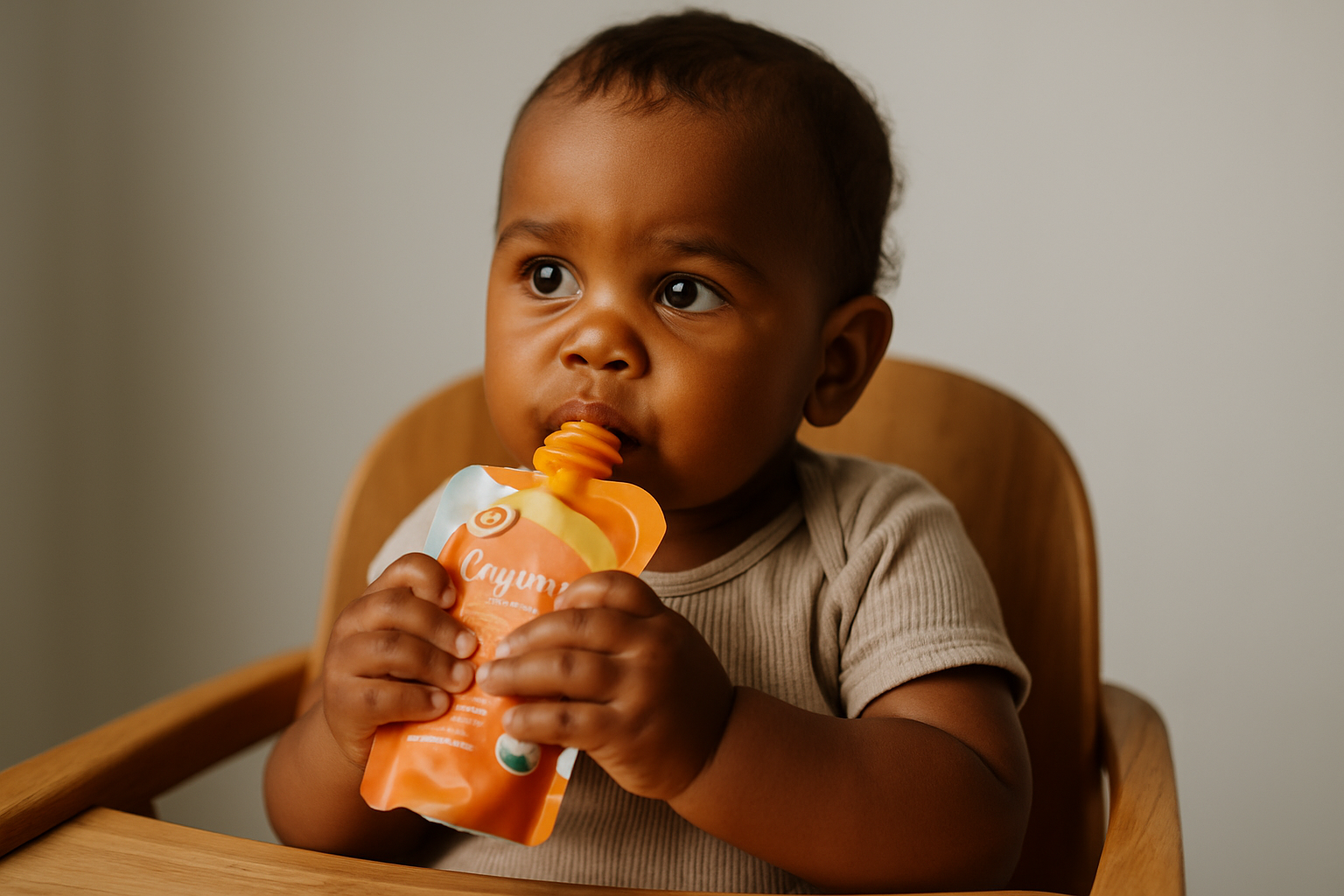
Food pouches are so convenient but are they doing more harm than good?

Weaning
How to wean your baby from breastmilk to a balanced diet

Food Refusal
When a Toddler Refuses a Previously Preferred Food
Bone Broth/Meat Stock
Everything you need to know about bone broth

Add a comment
Show Comments
0Leave a Comment
Your email address will not be published. Required fields are marked *